
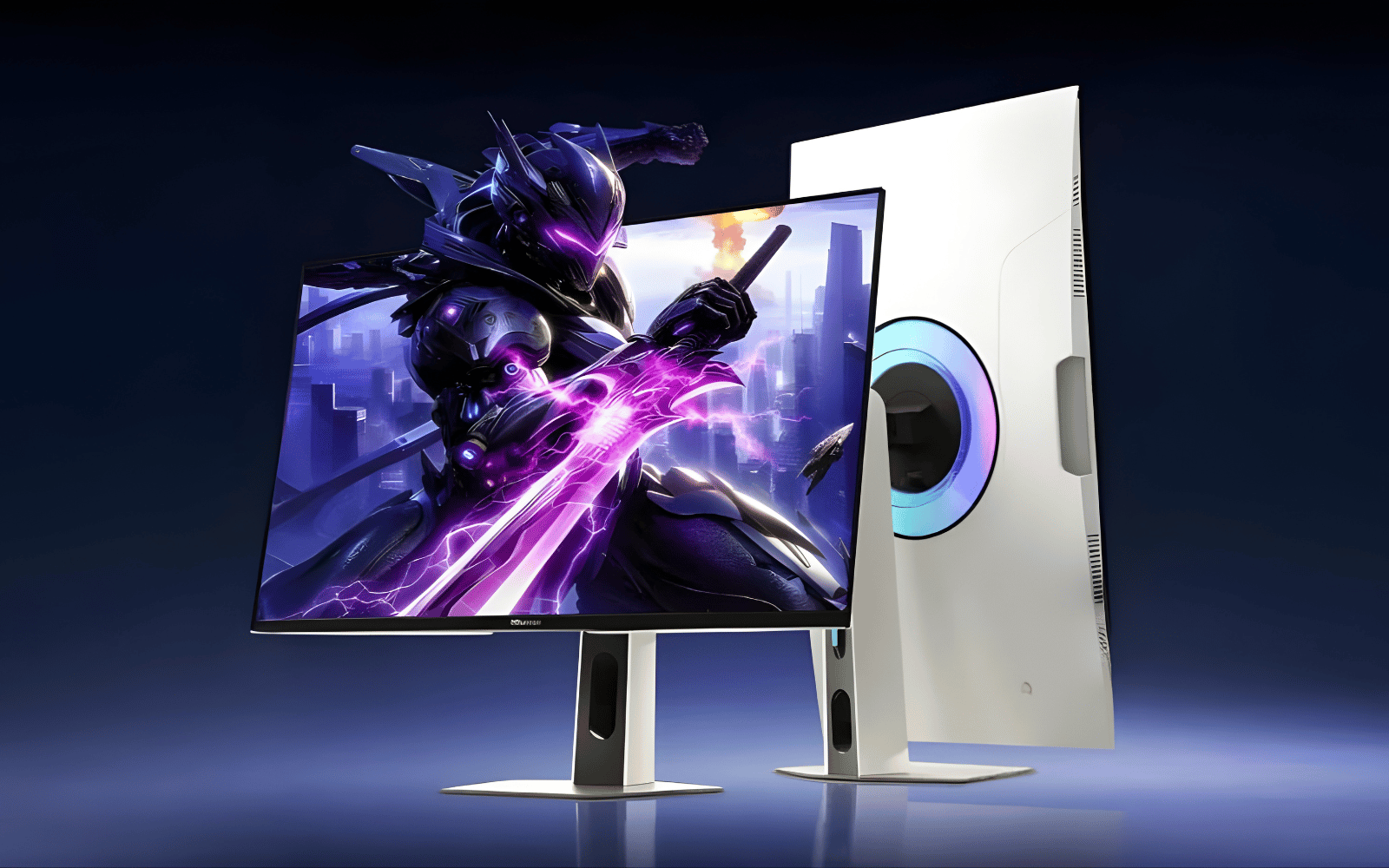
Hisense has just launched its latest gaming monitor, simply called the Hisense 27GX. The company’s latest monitor goes the same way as the rest of the high-end monitor industry lately, by stuffing it full of features. Not that we’re complaining.
One of the headlining features is the ability to switch between two refresh rate modes. This is proving to be a rather popular feature, but its implementation can be hit or miss. Hisense seems to have found a good balance, at least on paper, between the 4K 160Hz mode and the FHD 320Hz mode. It can’t match Asus’ 4K 240Hz and FHD 480Hz, but it’s also roughly half the price, so…
The Hisense 27GX wears two hats
The other specs of the Hisense 27GX are nothing to scoff at either. It sports an IPS panel with a mini LED backlight system that gives it 2,304 local dimming zones and allows it to hit a peak brightness of 2,000 nits (although that’s likely only for a tiny on-screen window).
That figure means it meets HDR1400 standards, but it isn’t yet known if Hisense went to the trouble of actually getting it certified. Together with the crazy brightness, it also has a “dual-layer nano-grade low-reflection coating”, which is said to reduce reflectivity and improve black levels.
Stopping there would be enough reason to pick this monitor up, but it also features the same MediaTek processor as the company’s flagship TVs. The chip gets 4GB of RAM and 64GB of onboard storage to play around with, which means it can also function as a smart TV. Download and use your favourite streaming apps right on the monitor, if you don’t want to use whatever you’ve got plugged into it, for some reason.
This sounds too good to be true, we hear you think to yourself. And you might be right. There is a catch (there always is). For now, this monitor is only available for purchase in China for 4,400 yuan (or about R10,550 directly converted).
There’s little stopping you from heading over there and getting one yourself, but if you’d rather wait to see if it will turn up here, we’d understand. We reached out to Hisense for those details, but hadn’t heard back by the time of publication. When we do, we’ll let you know.