

Space travel isn’t just about controlling a massive explosion until gravity stops caring. There’s usually a ton of scientific and technological development going on, too. NASA’s AVATAR program, announced for the manned Artemis II mission set for April next year, is one such development. Organ chips are involved.
For once, this isn’t exactly what it sounds like. Instead of dried slivers of kidney and liver in a crinkly silver-interiored packet, AVATAR (A Virtual Astronaut Tissue Analog Response) will take living samples of human cells into space to “study the effects of deep space stressors, including increased radiation and microgravity.” It beats experimenting on highly-trained astronauts.
NASA’s AVATAR
That isn’t strictly true, however. Part of the mission payload, alongside the four humans boarding the Space Launch System for its ten-day trip, are the aforementioned cells, which are bone marrow tissue sourced from astronaut volunteers. So technically, the experiment is being conducted on astronauts. Just… not the whole astronaut.
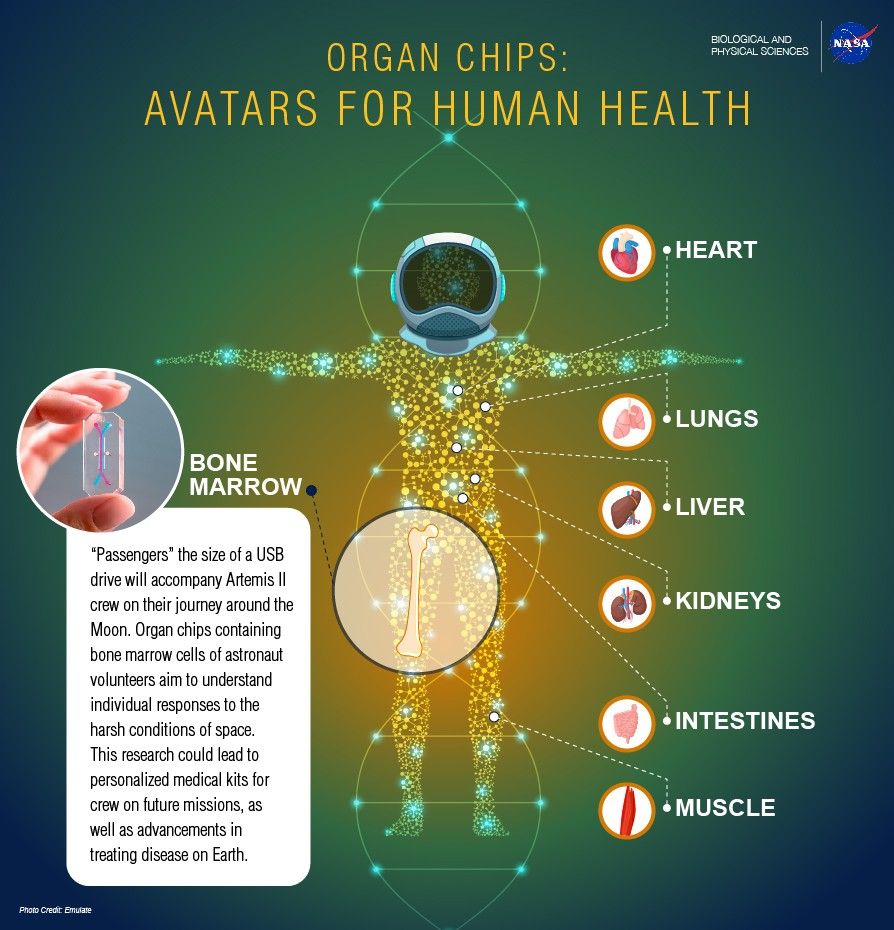 The cells will be derived from platelet donations by the four astronauts departing on Artemis II, resulting in “personalized organ chips, matched to the astronaut crew” that will accompany the full-sized humans on their trip around the moon. NASA’s science nerds will study the medical samples with an aim to develop better gear, like “personalized medical kits and preventative treatments”, for future space travel expeditions.
You won’t need your platelets sucked out and purified in order to send a little bit of yourself along with Artemis II. As with previous missions, like the Parker Solar Probe and Artemis 1, fans can sign up to drop their name into an SD card that will accompany the astronauts around the moon next year. Sure, you’ll join almost 500,000 others who will send their names along, but it’s still a cool bit of participation.