
With smartwatches strapped to millions of wrists and a global market now worth over $33 billion, wearable tech has gone far beyond simply monitoring your steps. After visiting the Huawei Health Lab in Dongguan, China, I now have a completely different appreciation for the serious science and sports testing powering the tiny computers we wear every day.
The Huawei Watch Fit 4 recently hit shelves in South Africa, and it’s worth understanding the tech, testing, and science behind wearable devices and how the “sports” watch delivers insights once solely reserved for professional athletes and sports scientists.
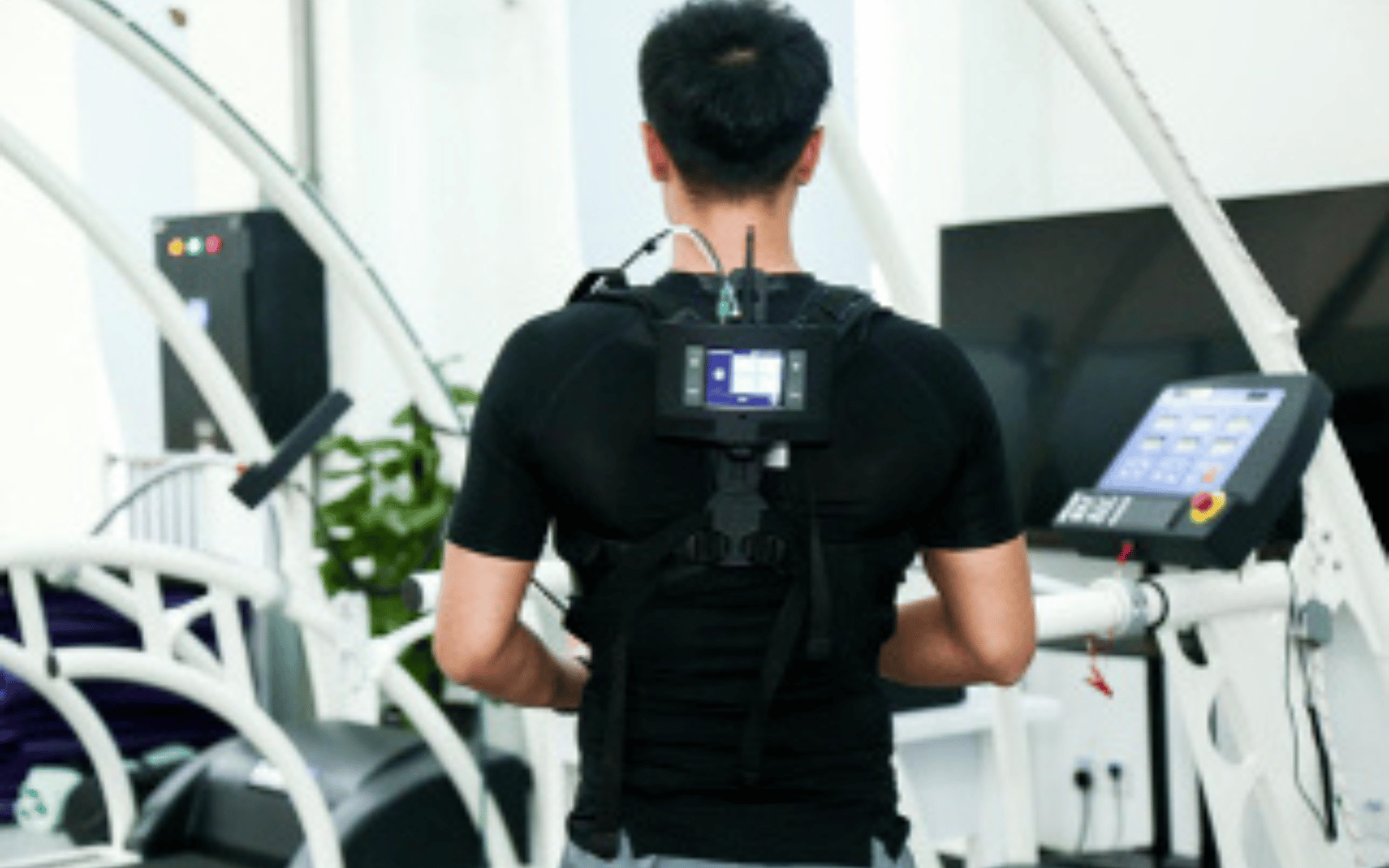
Spanning over 4,600 square metres, Huawei’s Health Lab is a sleek, futuristic space built to test the boundaries of human performance. It combines elite sports testing with rigorous scientific research. Think treadmills, golf simulators, shooting ranges, swimming resistance pool, rock climbing walls, and virtual cycling platforms. Each area is engineered to feed data into Huawei’s wearable ecosystem.
The golf swing that measured everything
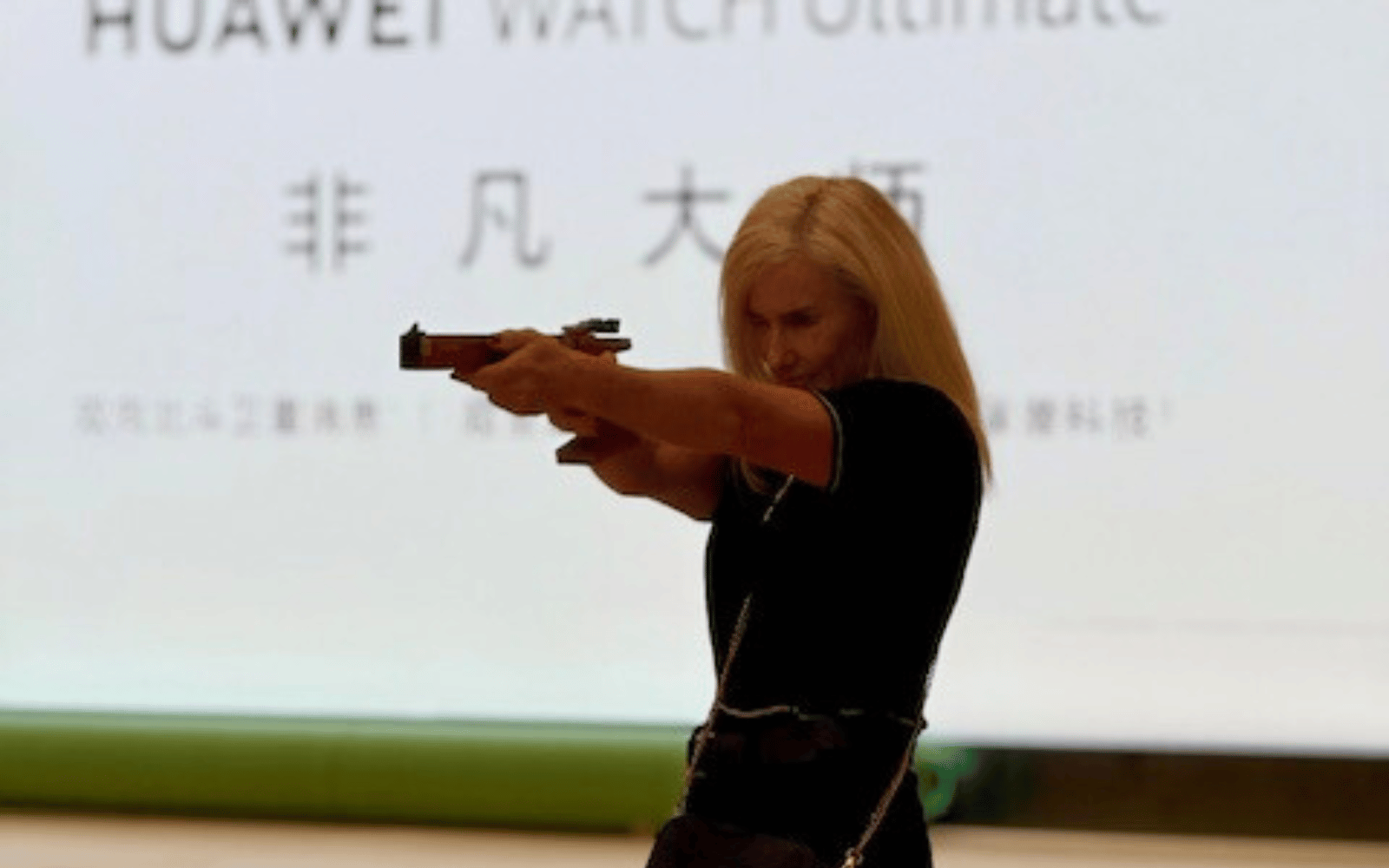 One of the highlights of my visit was the golf testing zone. This isn’t your local driving range. With over 100 coaches and players contributing to the development of the golf tracking algorithms, the research here is intense. Stepping into the simulation setup, you are immediately immersed in a data-rich environment measuring swing time, rhythm, and more. Since 2021, Huawei has analysed nearly 30,000 swings to refine the algorithm, and that level of detail shows. Sadly, not enough to improve my shocking handicap, but I gave it a go.
I also got to experience the shooting range, a lesser-known part of the lab but one that speaks volumes about Huawei’s commitment to niche sports. Precision, focus, and body control are key here, and Huawei’s wearable data is being used to track even the most subtle physiological signals that could affect accuracy and performance.
I would have loved to experience the treadmill testing or the indoor cycling platform (complete with full VO₂ max analysis), but alas, time was not on my side.
What is TruSense: Science on your wrist
TruSense is Huawei’s most powerful health-monitoring platform yet. It uses ultra-perceptive sensors, upgraded optical paths, enabling fast, accurate, and reliable readings whether you’re running a marathon, climbing a wall, or sitting at your desk.
Even more impressive is how it adapts to tricky environments. While I didn’t personally observe the high-altitude testing chamber (which simulates conditions up to 6,000m), I learned how researchers previously took teams of people up real mountains to gather blood oxygen data. Now, they simulate extreme temperature, humidity, and altitude conditions in a climate-controlled room to fine-tune their sensors. With TruSense, Huawei wearables give blood oxygen readings 40% faster, with alert functions that could be life-saving for anyone interested in altitude mountaineering or climbing
Wearable testing for everyone
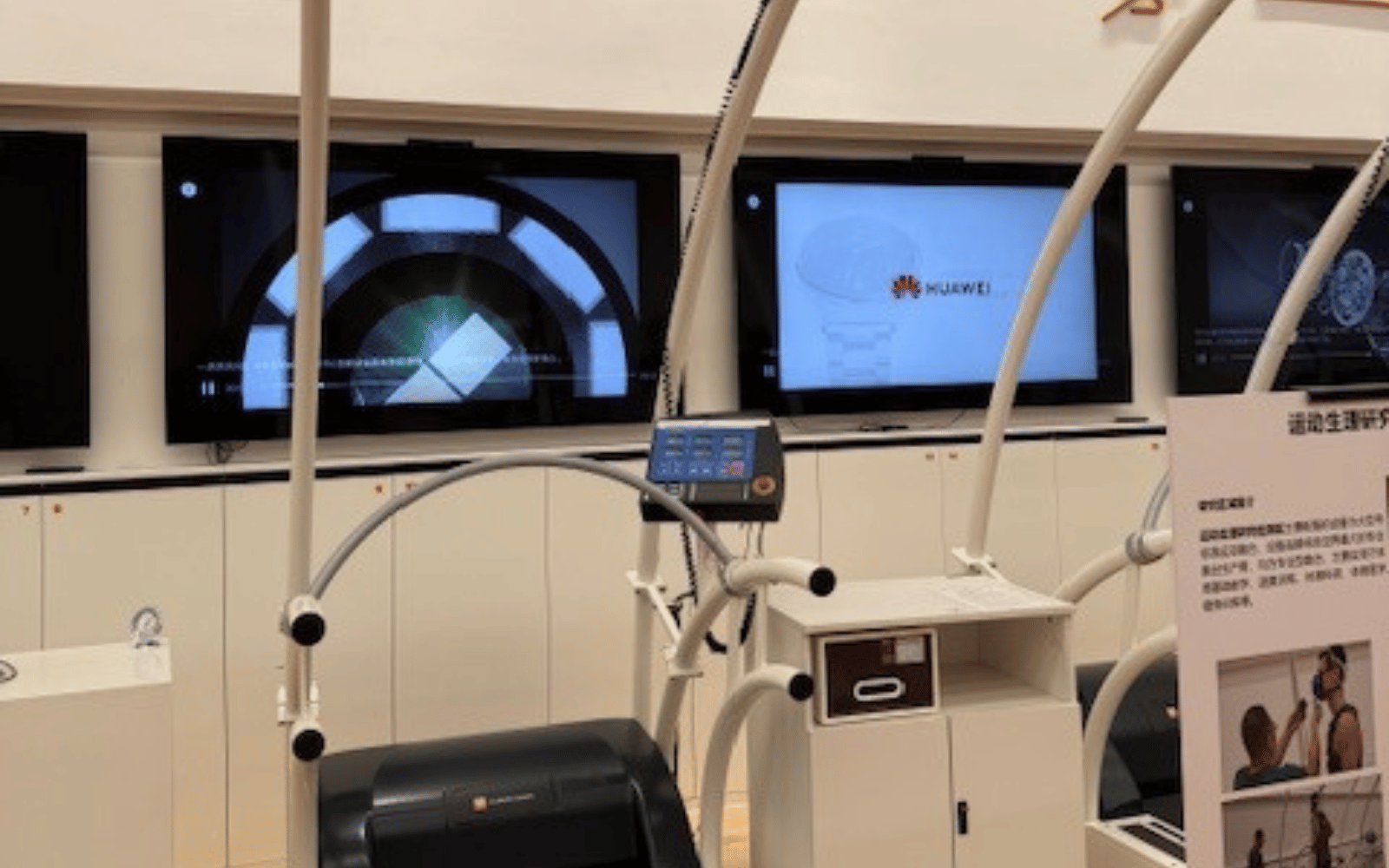 While I missed out on strapping into the high-speed treadmill myself, I did speak to a Huawei engineer about their testing protocols and was informed that you don’t need to be an elite athlete to use the lab. Anyone can book an assessment, and it’s these ongoing assessments using professional sports science tools that enable the team to continually tweak their algorithmic models to make smartwatches more accurate than ever.
Cyclists benefit from Huawei’s professional cycling platform and virtual training environment that simulates resistance, terrain, and competition. The TruSense system fine-tunes lactate threshold monitoring and calorie burn estimates with such precision, you’d think a coach was watching you live.
From water to vertical walls
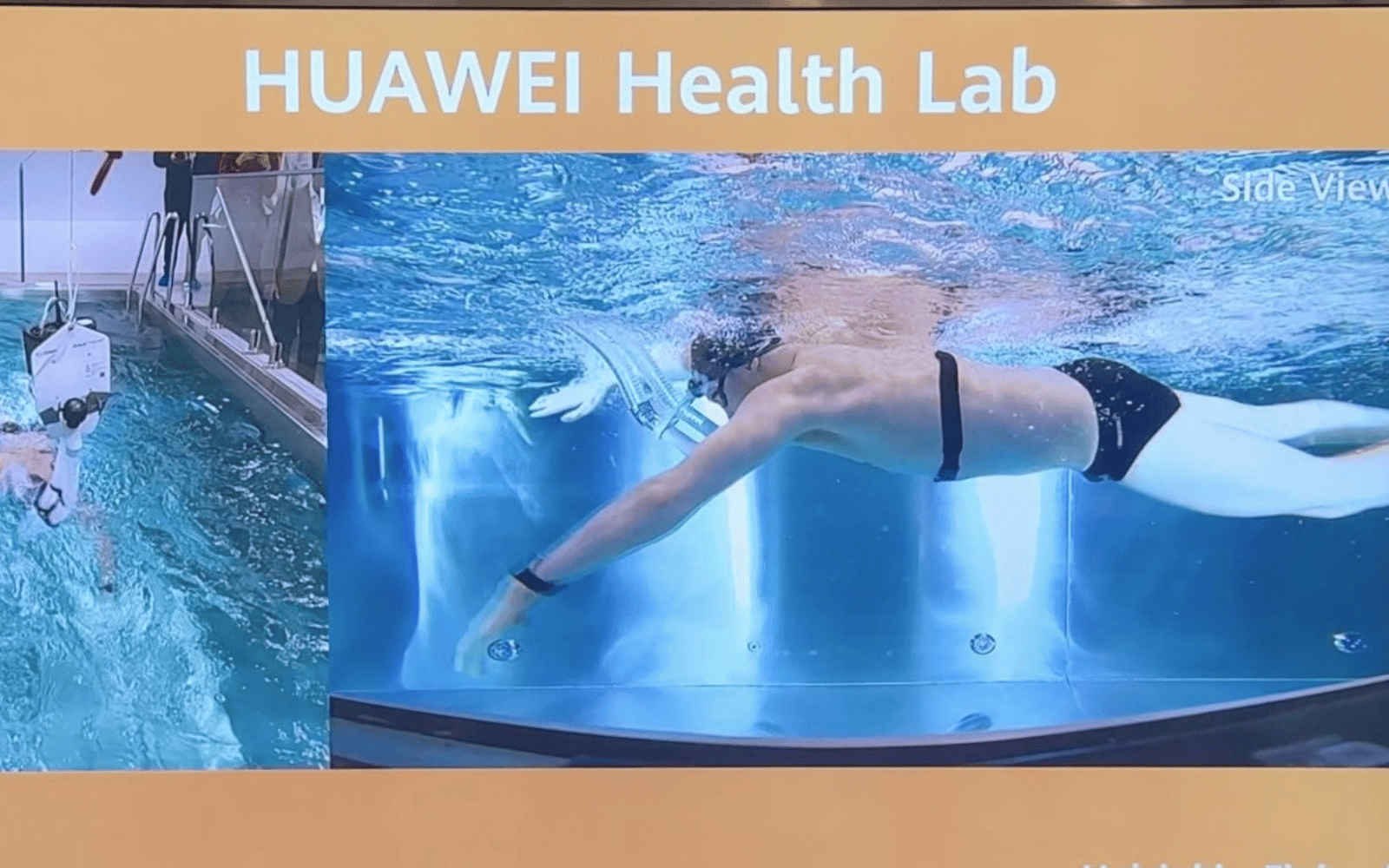
Swimming and rock climbing may seem worlds apart, but both pose serious challenges for wearable monitoring. The Huawei Health Lab offers both, a current-controlled indoor pool to mimic real swim strokes and an indoor rock climbing wall taller than most two-story houses. These aren’t just for show. They are test beds to assess how wrist movements, muscle contractions, and posture shifts alter signal accuracy.
To combat interference, Huawei’s TruSense technology uses multi-region optical path design and advanced algorithmic filtering to clean up the data, allowing your smartwatch to track real physiological performance whether you’re a swimmer or halfway up a cliff face.
Health Glance: your 60-second check-up
 The culmination of all this testing is Health Glance, one of the standout features of the Watch Fit 4. With a single tap, you can generate a mini health report in under a minute, covering everything from heart rate and oxygen saturation to stress, ECG, and even lung function screening. It’s incredibly efficient and feels like a mini check-up, anytime, anywhere.
Final thoughts
It’s easy to forget, when scrolling through heart rate graphs, sleep, or stress metrics on your wrist, just how much effort goes into making it all work. But after seeing it up close, it’s clear wearables are more than fitness bands, they are wellness labs refined by science to push us all a little further.