

Meta’s going after your private images, too
The idea that Facebook wants access to your smartphone’s private camera roll isn’t a very comforting thought, but it’s even more disturbing once you see why it wants access. According to a report from TechCrunch, the company is suggesting users AI-generated versions of their own images, including ones they haven’t even uploaded.
Meta isn’t pulling this off by sneakily penetrating your smartphone’s defences. It’s simply asking users for access by opting into Facebook’s “cloud processing”, where it can generate new ideas straight from your gallery, such as collages, recaps, AI restylings, and photo themes. It’ll do so by uploading images from your gallery on an “ongoing basis” straight to its cloud, allowing it to regularly generate these suggestions.
Fortunately, users have the option to opt out of the ‘feature’ and continue as normal. Meta notes that suggestions are only visible to the user, and won’t be shared without their consent, and won’t be used to target ads. But as TechCrunch points out, by clicking “Allow” on the pop-up, users are agreeing to Meta’s AI Terms of Service. This states that your media and even facial features can be analysed by Meta’s AI.
It’s also got the right to “retain and use” whatever personal information it may have gleaned from the images it’s analysing to “provide more personalized outputs.” According to Facebook, however, in a statement sent to The Verge, it isn’t using these images to train its AI models. We’d love to take Meta’s word at face value, but we’ve been burned in the past. Just don’t be surprised if the company’s stance changes. Maybe without your knowledge.
Tesla finally feels futuristic

Tesla has long prided itself on being a futuristic brand, and it’s backing up those sentiments. Again. In what it calls a world first, a brand-new Tesla Model Y has driven itself from the factory to its new owner’s home, relying completely on Tesla’s Full Self-Driving (FSD) technology.
“This Tesla drove itself from Gigafactory Texas to its new owner’s home ~30min away — crossing parking lots, highways & the city to reach it’s new owner. The first autonomous vehicle delivery of it’s kind in the world,” reads the description of the YouTube video showing this off.
It’s admittedly a cool use of the technology, even if it’s a little bit later than Elon Musk initially expected when he first started testing Tesla’s autonomous abilities. Musk bragged on X that “to the best of [Tesla’s] knowledge, this is the first fully autonomous drive with no people in the car or remotely operating the car on a public highway.”
This was quickly disputed, with users pointing out that Waymo has offered this sort of functionality for more than a year, most recently taking on Los Angeles’ hectic highways in January of this year. Even so, should Tesla make this the norm, it’ll save time for both Tesla and its customers, while bringing costs down. When that’ll be the case for all Tesla deliveries in the future, the company hasn’t said.
Moza’s taking flying seriously
If you’re at all familiar with simulating various modes of transport from your own air-conditioned home, you’ve probably heard of Moza before. Like all sim hardware, whether you’re imitating an ice-road trucker or living out an aviation dream, it can be difficult to know where to begin. Moza is hoping to change that with its new range of flight sim gear, aimed at the mid-range entry point.
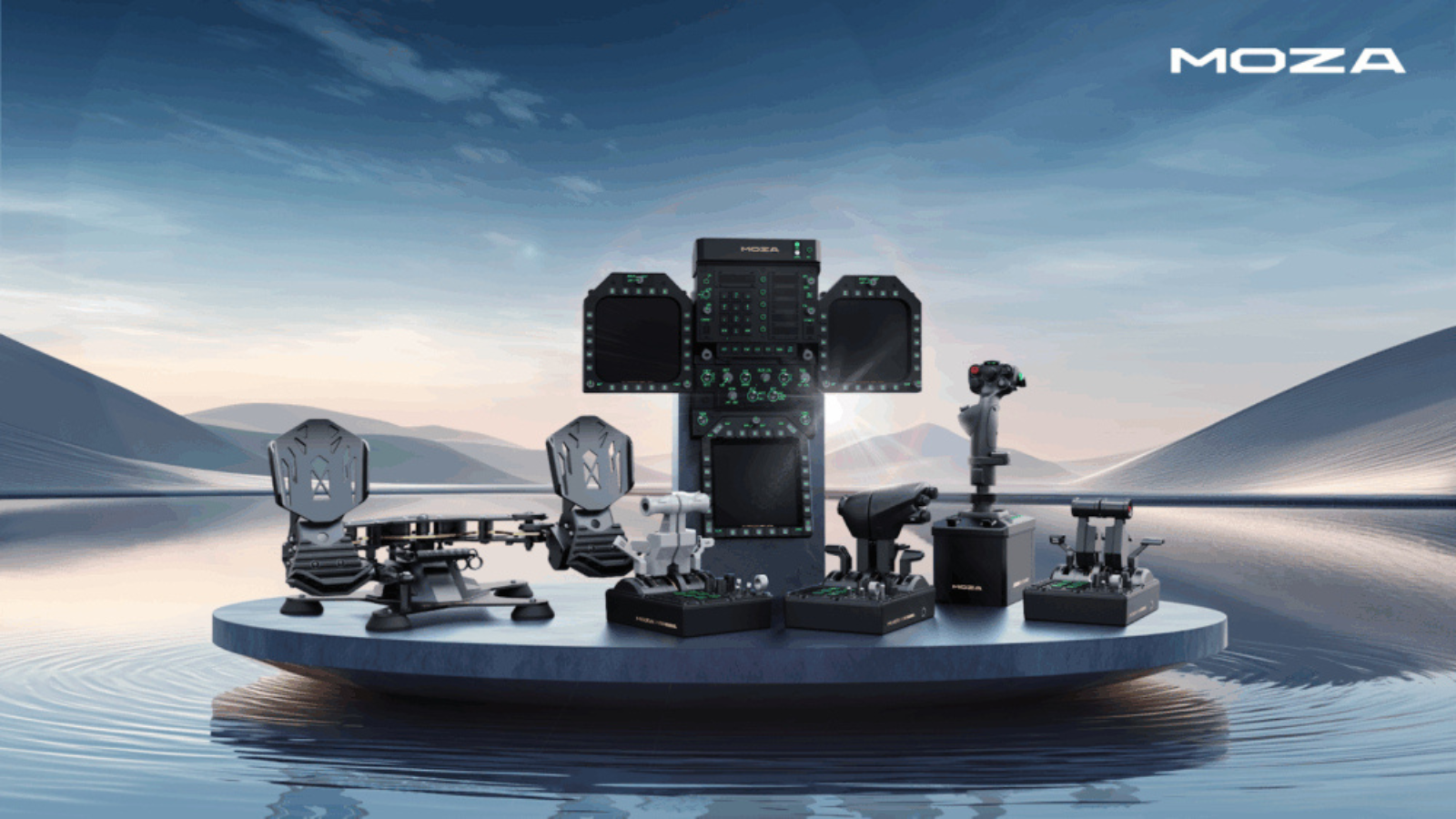
Moza offers features typically reserved for those with bigger wallets. Announced at FlightSimExpo last week, Moza’s new flight sim gear includes five new pieces of gear — all designed to work in conjunction to bring users a “fully integrated ecosystem” and “elite-level performance”.
There’s the MHG Flightstick, bundled with the new ‘AB6 FFB Flight Base’ that’s designed to accommodate whatever craft you give it, from fighter jets to helicopters. Moza’s promise of an “ultra-responsive force feedback” system that’ll allow users to feel every gust of wind separates this mid-range ecosystem from all the rest. Up next is the MTQ Throttle Quadrant featuring “adjustable motion, swappable grips, and finely tuned axis control” — suitable for both civilian and military needs.
Rounding out the bundle is a decent pair of pedals — the MRP Rudder Pedals — and finally, the centrepiece of Moza’s kit — the FMP18 Front Panel System. It’s supposedly a “precision-crafted” replica of old naval jet cockpits, though it’s been upgraded with multiple modern 7.1in displays (Moza doesn’t mention specifics), magnetic swappable bezels, and more than 100 proper buttons. Whether Moza can live up to its claims of this being a more mid-range offering remains to be seen when it announces pricing and availability.
Watch out Rematch, Super Mario Strikers has returned

The Nintendo Switch 2’s best feature isn’t its massive 7.9in display or the ability to run some big games like Cyberpunk 2077 at a semi-palatable frame rate. It’s the company’s GameCube emulator, shamelessly tucked behind a paywall and only sporting three games at launch. A month later, the company has finally announced that a new game will swell the library’s ranks — Super Mario Strikers.
Whether you think it’s right to charge for access to those twenty-year-old games you paid for back then is another matter entirely. It’s here, and Nintendo isn’t budging where its Classic games are concerned. Only available to active Switch Online + Expansion Pack subscribers who own a Nintendo Switch 2, Super Mario Strikers will turn up on 3 July 2025.
It’ll join the likes of The Legend of Zelda: The Wind Waker, F-Zero GX, and Soulcalibur II. Strikers is to football what Mario Kart is to F1. It’s got semblances of some official football rules, but with a Nintendo twist to everything. Players can foul other players to get the ball, and banana peels aren’t only allowed, they’re encouraged. The real upgrade here is the power to play with friends, both locally and online.