

LG Display, makers of pretty much every screen, has some new technology on the way that should bring noticeable improvements to laptop battery life across the board. Well, for the laptops that use it, anyway.
Over the weekend, it announced that mass production has begun of the world’s first laptop LCD panels capable of dynamically adjusting the refresh rate (how many times the screen redraws itself per second) from 120Hz down to 1Hz, thanks to its new aptly-named Oxide 1Hz technology.
But wait, isn’t ‘bigger number better’ for refresh rates? Usually, yes. But so is this.
LG Display slows things down
A higher refresh rate means smoother motion in fast-paced scenes. But each refresh consumes a bit of power. When you’re staring at an email or spreadsheet, there isn’t usually a lot of fast-paced action. In those cases, LG Display’s new panel can automatically adjust its refresh rate to only refresh once per second.
This technology has been around in smartphones for ages, often referred to as LTPO (Low-Temperature Polycrystalline Oxide). We’ve also had laptop panels that can refresh at 120Hz and up for a while. Support for dynamic refresh rates in laptops also isn’t all that new, with Windows 11 adding support in 2021. But most of those panels only go as low as 60Hz.
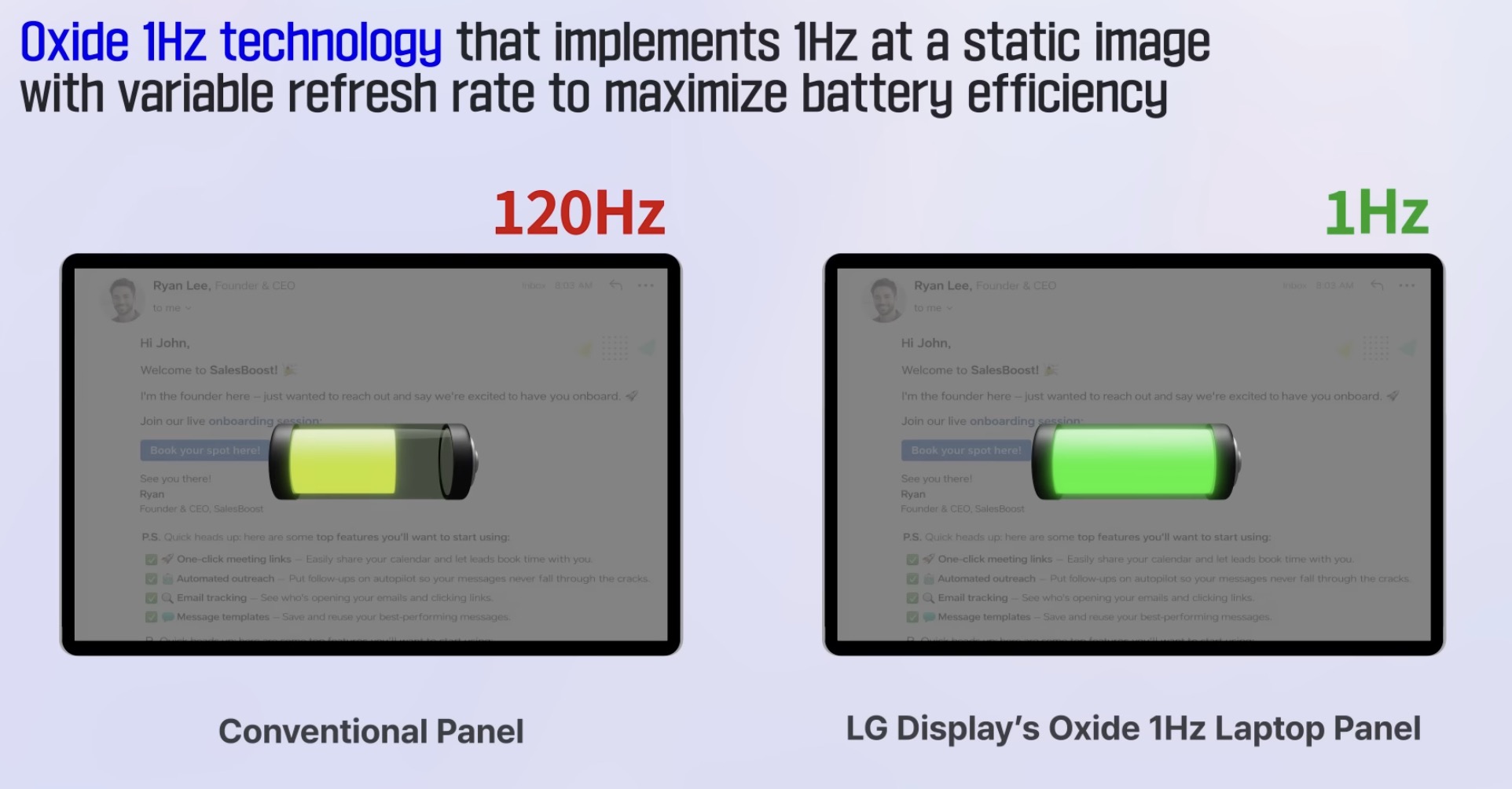
Think of all that battery life you’re wasting when nothing is happening on your screen. Now, think of how many more episodes you could binge by saving that power for when you need it. LG Display reckons we’re looking at a 48% improvement in battery life. That’s nothing to scoff at.
The technology is limited to LCD panels for now, with Dell’s XPS lineup the first commercially available laptops to receive it. The company plans to begin mass production of OLED panels using the same technology in 2027.