
The Momentum 4 makes for a very appealing overall package. Their V-shaped tuning might appeal less to audiophiles than the average joe, but that also means that most people will enjoy listening to just about everything you could throw at them. If you're in the market for new cans, and can find them close to their $300 (R4,850) price, this should be an easy purchase. There's always the HDB 630 if you're looking for something with a little more audiophile appeal.
-
Design
-
Sound
-
Battery
-
Features
-
Value
If you keep track of the headphone industry, you’re probably aware of Sennheiser’s Momentum 4 wireless headphones. They first came out in 2022 and are still talked about in the same conversations as flagships from Sony, Apple, and Bose.
Before the HDB 630 came along, the Momentum range was considered Senny’s flagship wireless active noise-cancelling headphones. While it doesn’t carry the audiophile appeal of the 630, the Momentum 4 still holds up in 2026.
A sign of the times
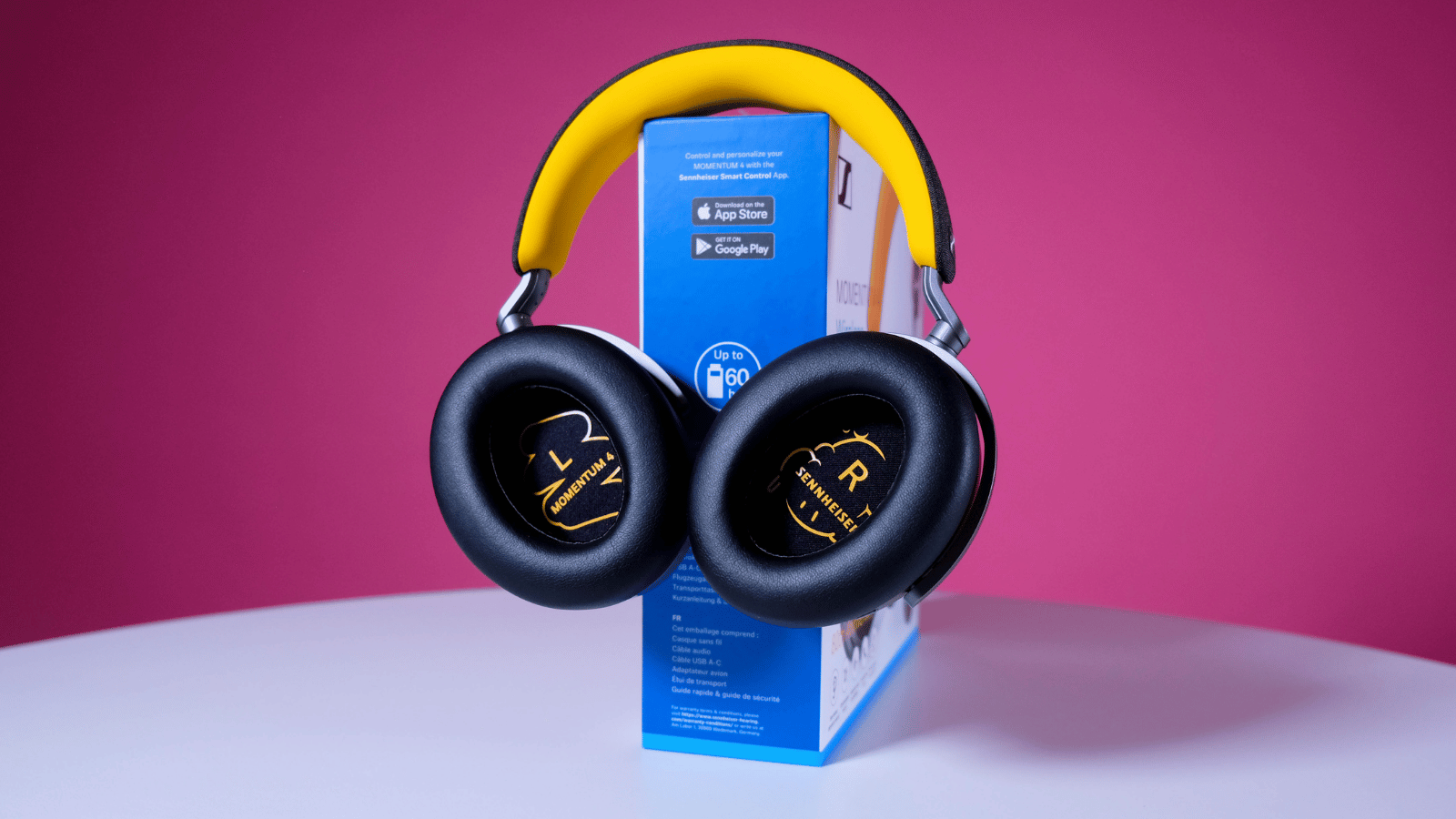 Sennheiser opted to leave the vintage aviator style behind when it designed the Momentum 4, instead choosing a modern, clean aesthetic. While maybe not as charming, the new design is certainly more practical. If you’ve seen the Momentum 3’s case, you’ll know what we mean. Rather deep, that one.
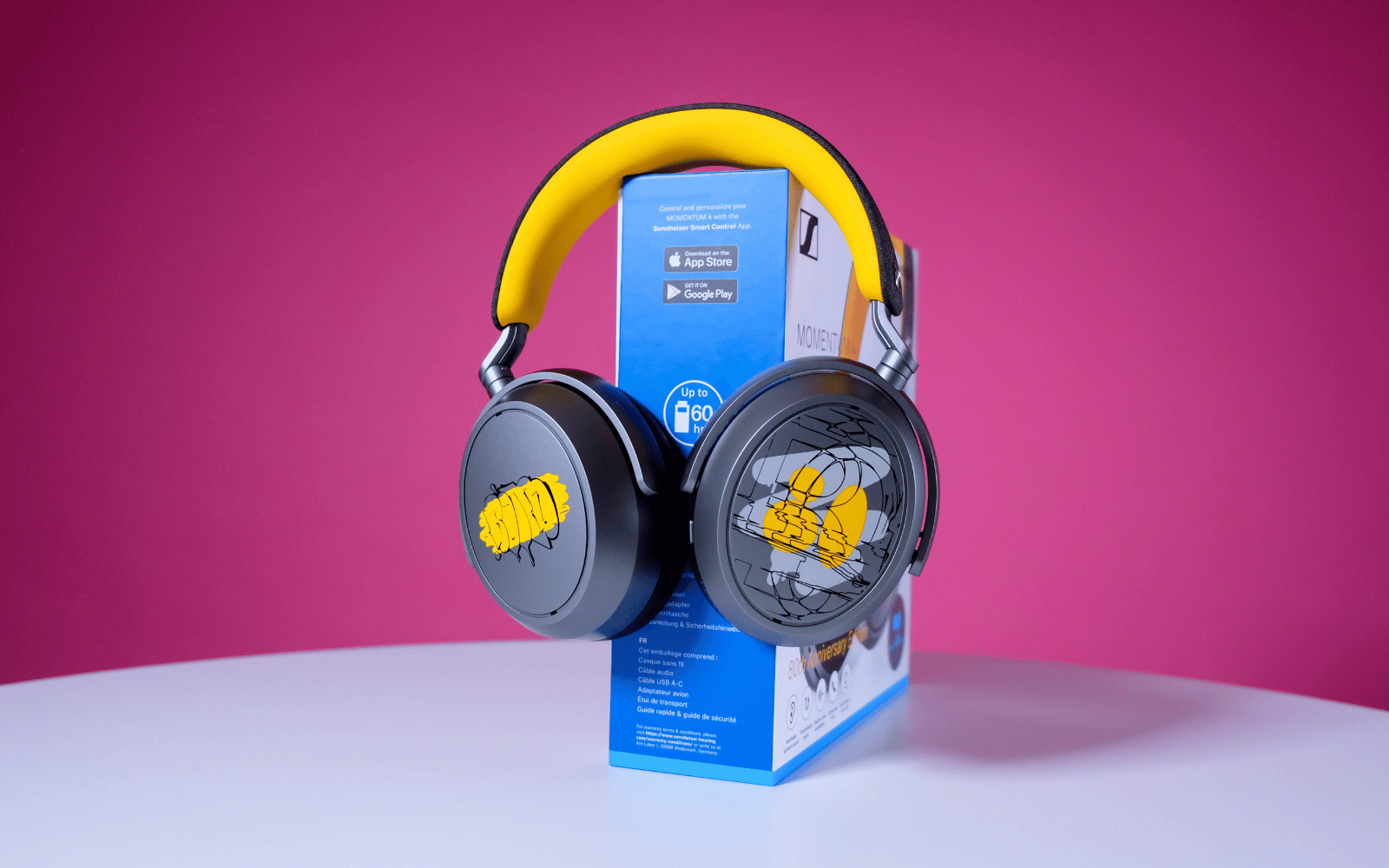
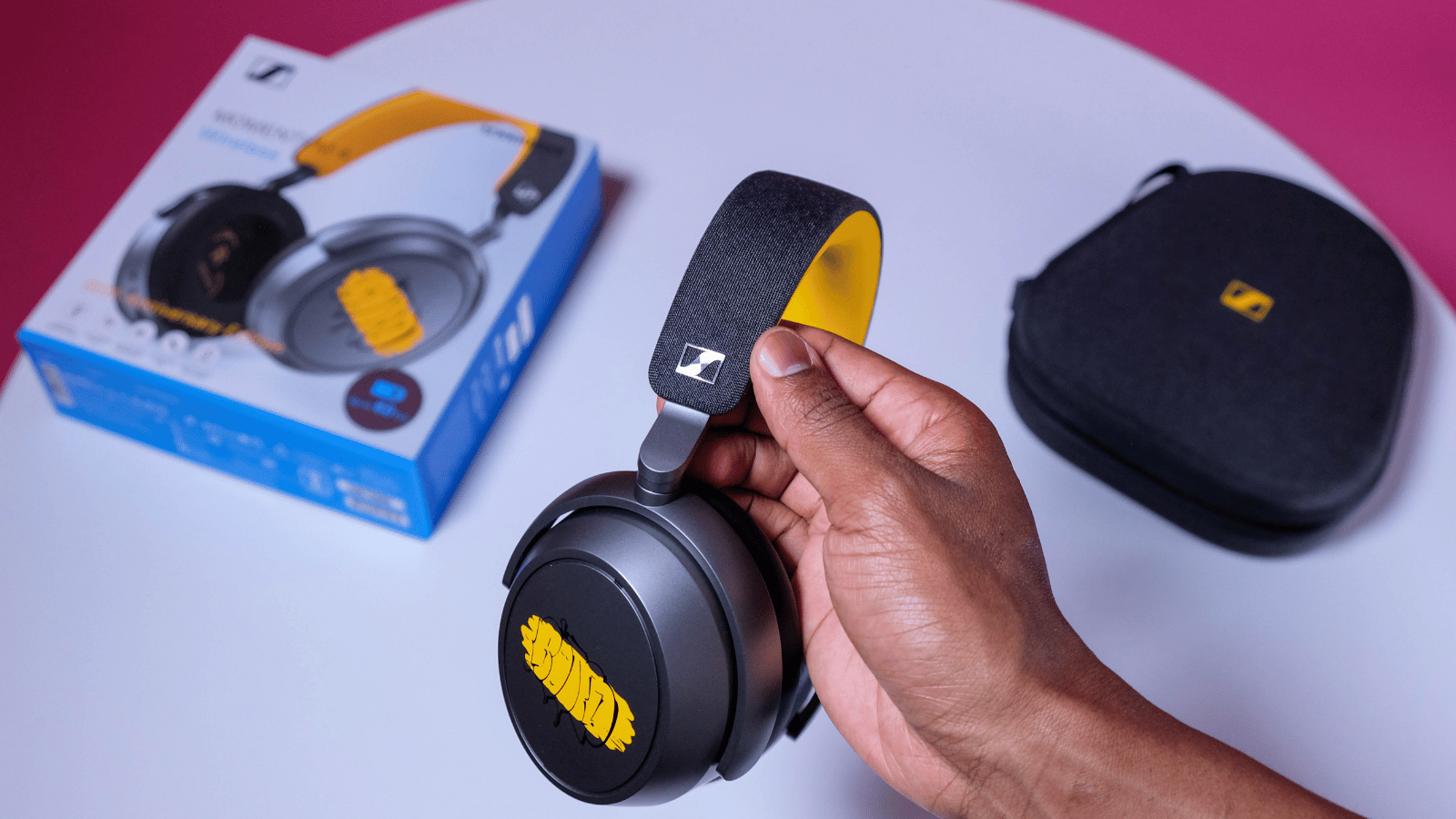
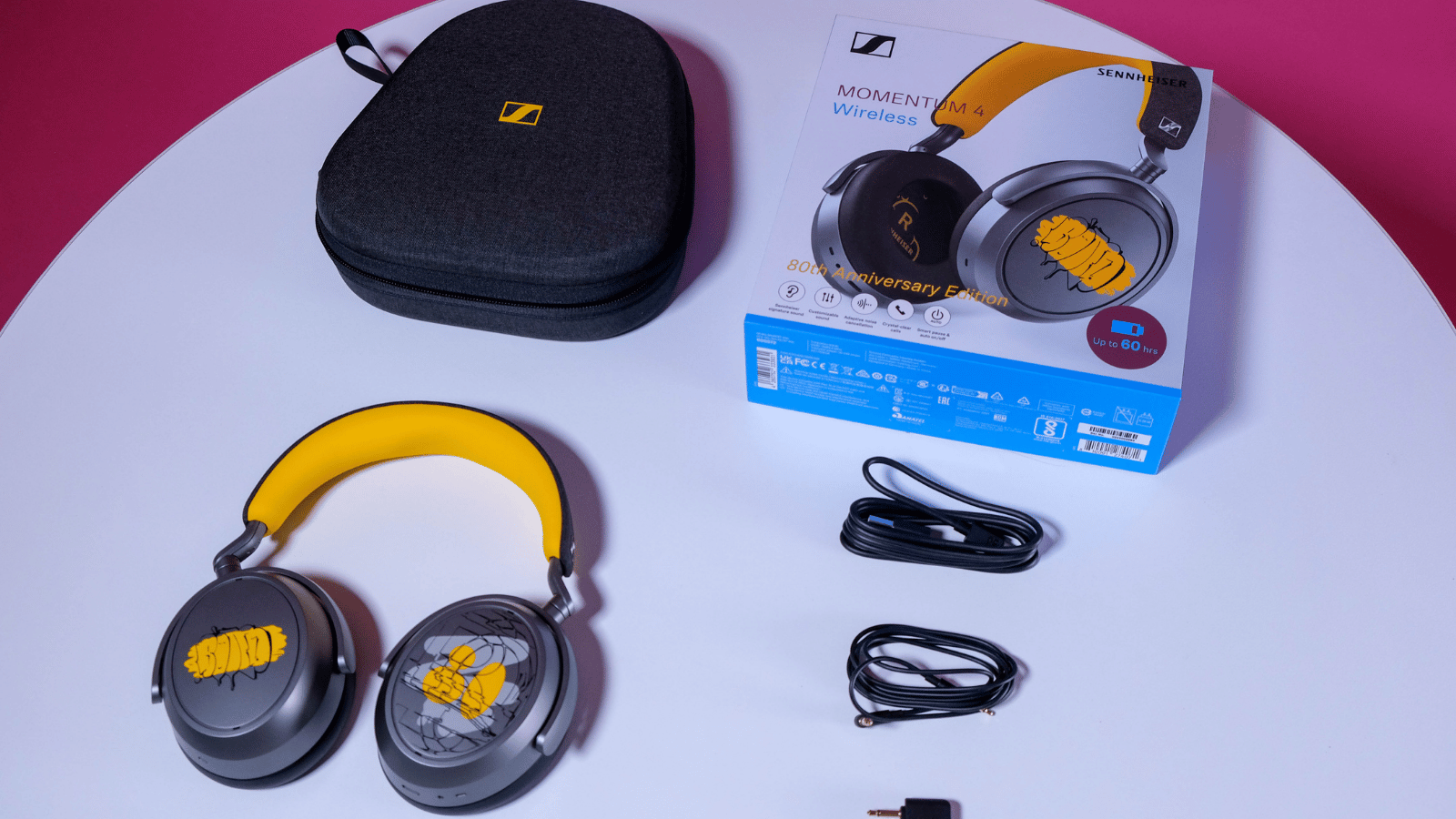
The Momentum 4 is available in several finishes, the most recent of which was unveiled towards the end of last year to celebrate the company’s 80th anniversary. The 80th Anniversary Edition that we have for review features design flourishes by German graffiti artist Bond Truluv. The yellow accents in particular are a not-so-subtle nod to the iconic HD 414 from 1968.
Not charming, but practical, and also very comfy. Since the HDB 630 cribbed most of its design from these, the fit and feel are largely the same. However, these are lighter and have slightly shallower earcups, so they don’t feel as bulky on your head.
The 630 also copied its gesture controls from these, so what we said of those applies here, too.
Aiming for mass appeal
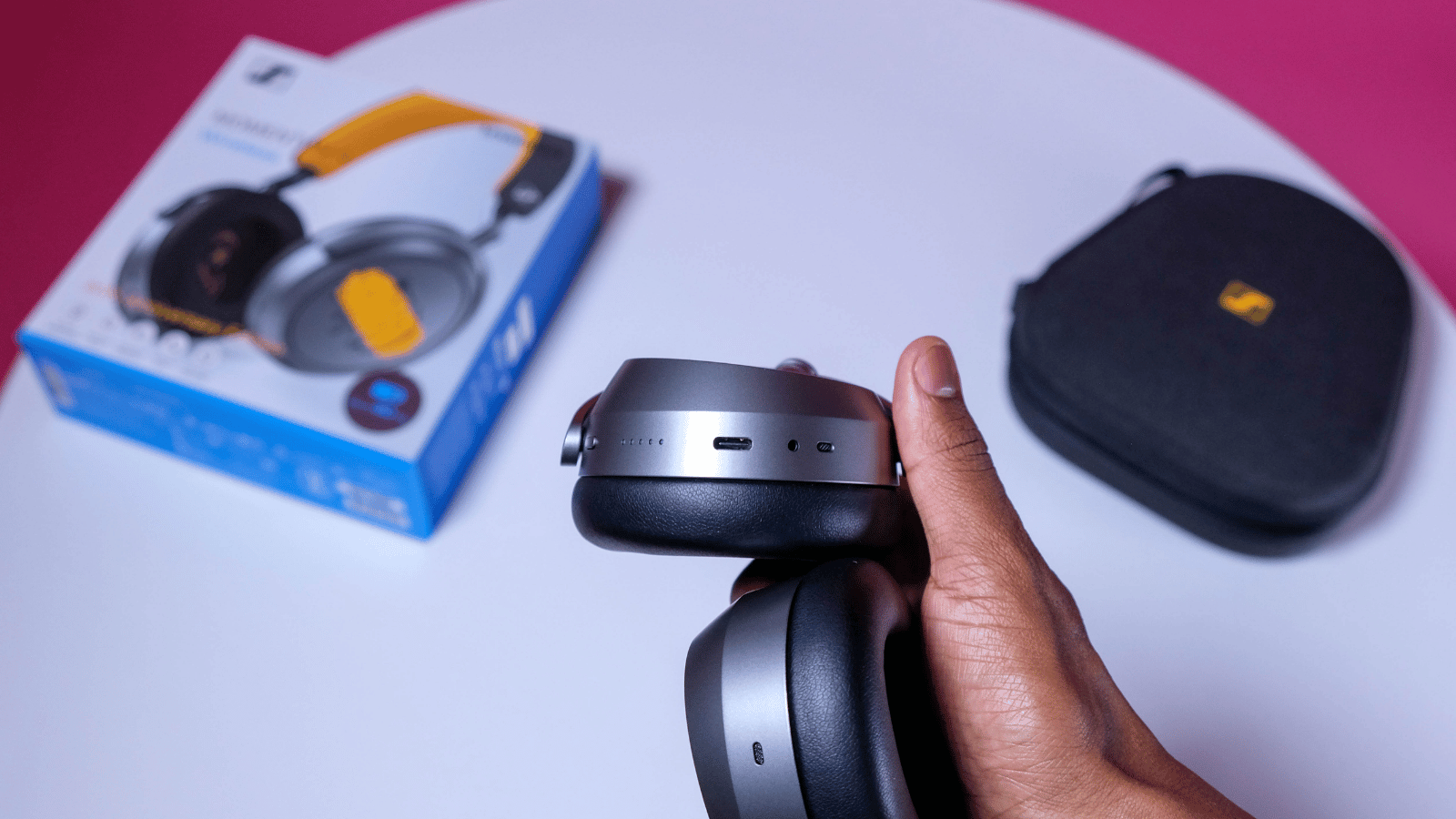
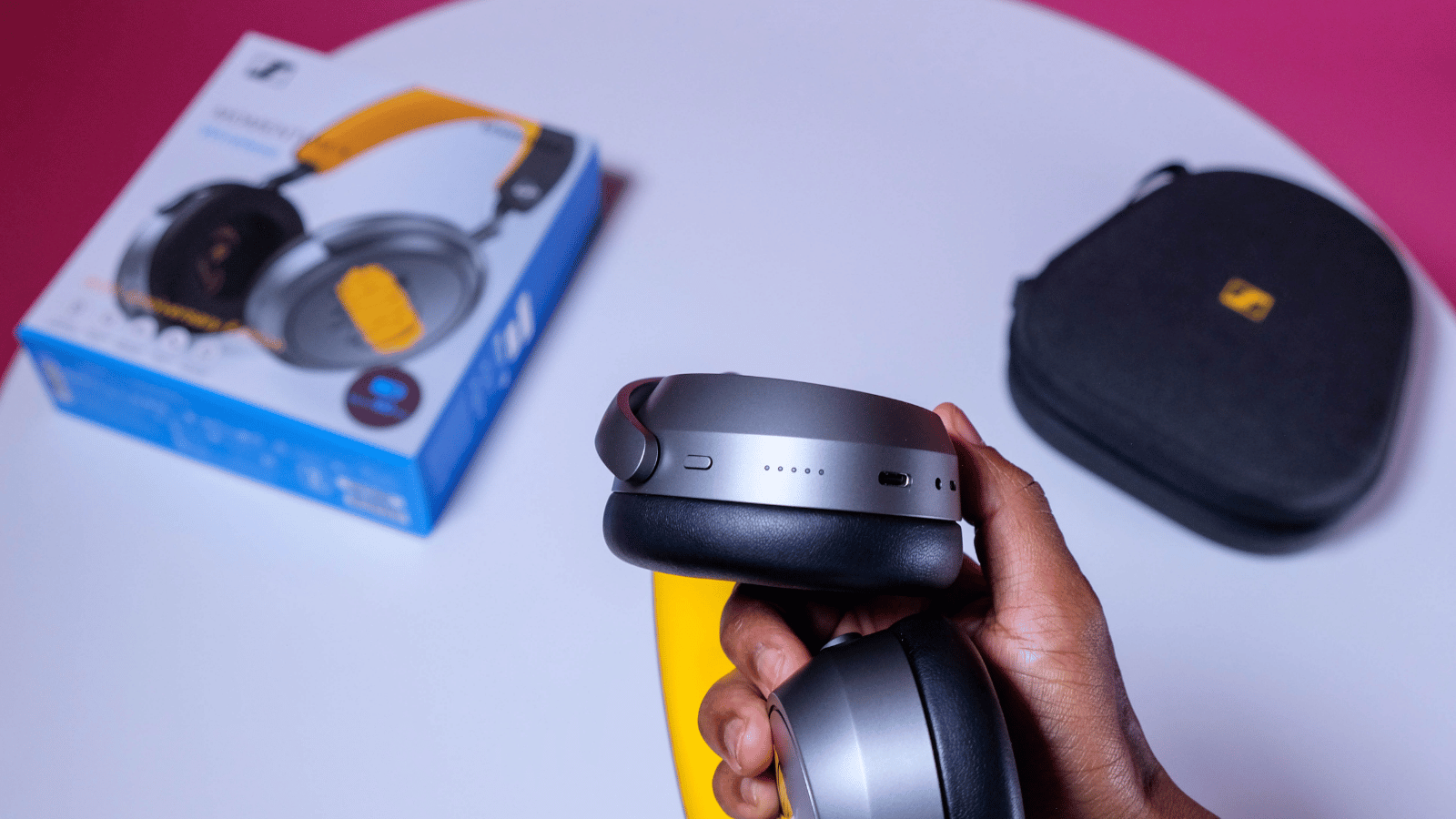
If the HDB 630 were aimed specifically at audiophiles, these were made for everyone else. Sennheiser still calls the sound “audiophile-inspired”, but that could be said about every product it’s ever made. The Momentum 4 features similar 42mm drivers to the 630, but they aren’t technically the same. The 630’s drivers were made in Sennheiser’s facility in Ireland, while the Momentum 4’s drivers are manufactured in China, where both headphones are assembled.
They present a similar sound stage to what you’d expect from closed-back over-ear headphones. Not as wide as the 630’s, so you might be aware of the music coming from right next to your ear, instead of sounding like you’re surrounded by the band.
Where the HDB 630 sought target curve conformity, the Momentum 4 sports a familiar V-shaped tuning where the bass and treble have been emphasised somewhat to add more colouration to your music and appeal to a wider audience. If the HDB 630 is black coffee, the Momentum 4 adds milk and sugar.
 That is particularly apparent in the low-end. To say these are bass-heavy out of the box would be an understatement. While their low-end response is still tightly controlled (for the most part), how well it works will depend on what you’re listening to, we found. In Chase & Status’ Baddadan it works well, but in Daft Punk’s Get Lucky, the opening bassline came out a little muddy.
Due to the emphasis on either side of them, the mids present as slightly recessed. There is still a good amount of presence in vocals and instruments that are found in this range, see Chris Jones’ sultry voice in Long After You Are Gone.
Like the low-end, the treble receives some boosting to give the Momentum 4 an energetic quality. Along with his sultry vocals, Chris Jone’s strumming and plucking feature plenty of that metallic twang in exquisite detail. Although this wasn’t true for everything we listened to. In some tracks, like MJ’s Billie Jean, it can sound a little too sibilant. Like someone’s turned up just the “s” sound.
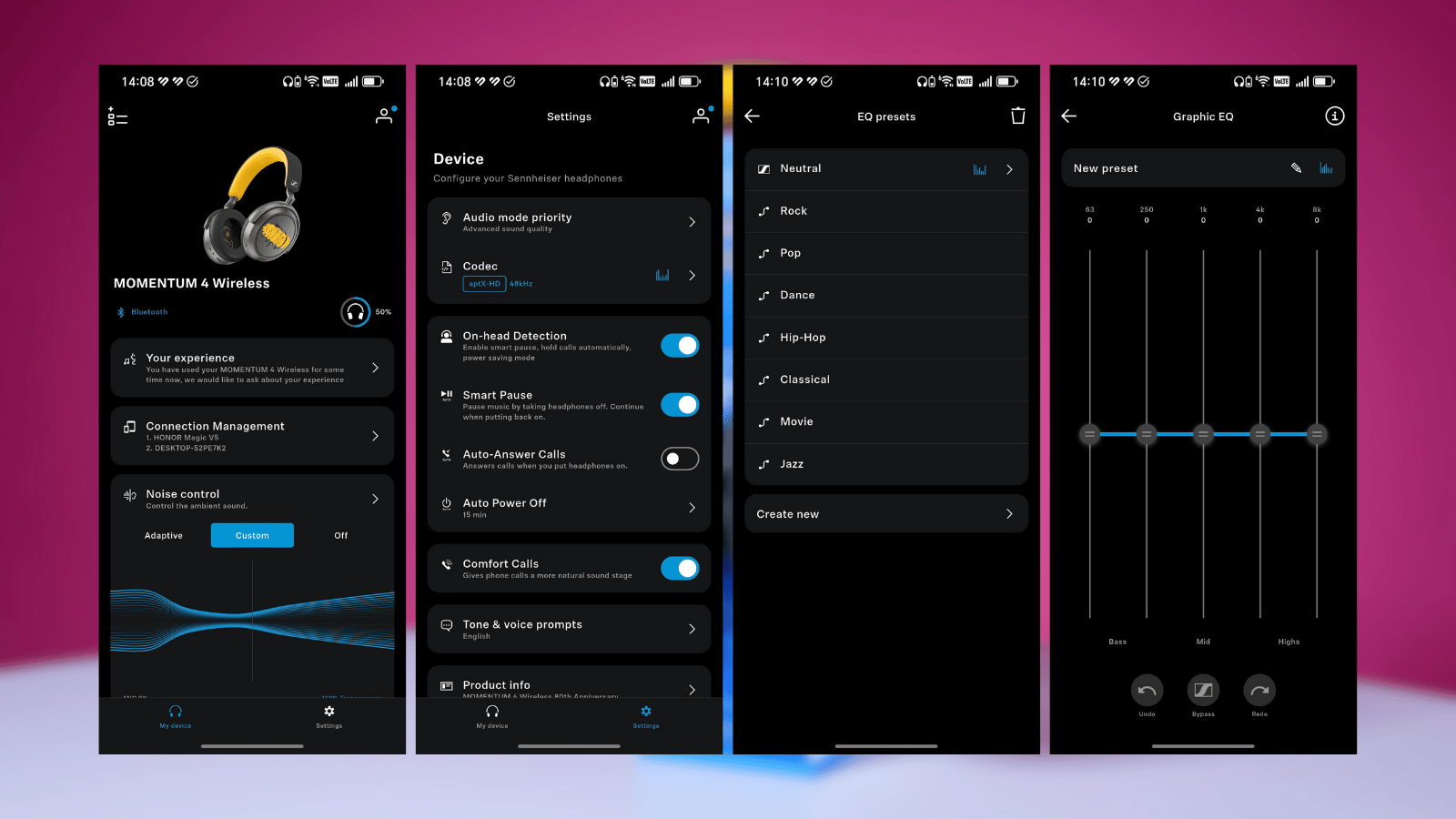
Whether these will be deal-breaking issues for you depends on a bunch of things, like how closely you’re listening and how keen you are to fiddle with EQ. The Smart Control Plus app provides a 5-band graphic EQ, which isn’t nearly as comprehensive as the one you get with the HDB 630. We did experiment with the podcast preset, and that offered some assistance with the mids.
If you’re unsure if these will do your favourite genres justice, we’d recommend trying them out. The chances are high that they’ll be to your taste.
The other bits
 The Momentum 4 features similar battery performance to the HDB 630. They also boast around 60 hours of listening with ANC enabled. While there’s no added dongle to bring it down, they can’t quite charge as quickly — a 5-minute charge will add four more hours of playback. That’s still plenty to get you through the rest of the day when they’re about to die on you at lunch.
Overall, these do have fewer features than the HDB 630. This makes sense. If you’re not an audiophile, you probably don’t care about every step in the signal path or which codec your headphones are using (the app will still tell you that info, however).
As we mentioned, there’s no BTD 700 dongle included with these. So if your source doesn’t support the aptX suite, you might be relegated to using SBC or AAC. That won’t be an issue for folks just looking for decent-sounding headphones that also block out some external noise. These will do that, just not as well as the best of the bunch. The same goes for their transparency mode.
You do still get a decent number of extras; we always love to see a hard-shell case with ANC headphones, and these also come with an aeroplane adapter and a set of the cables you’ll need — 2.5mm to 3.5mm aux cable and USB-C to USB-C.
Sennheiser Momentum 4 verdict
 Senny’s Momentum 4 offers a very appealing package overall. Just like the HDB 630, these are some of the most comfortable headphones we’ve reviewed. While their tuning doesn’t follow a target curve like their younger siblings’, their V-shaped tuning is designed to appeal to as many people across as many genres as possible. Their ANC performance isn’t bad, but it could be better.
But the main thing it has going for it is a great value proposition… if you can get them at the right price. In the US, the price has dropped to $300 (around R4,850). You can find them for close to that here (although, if you especially want the limited-edition 80th Anniversary model, your choices are more limited), but you could also find them for nearly double that, depending on where you look. At this price, they should handily beat just about everything else for the same money.