
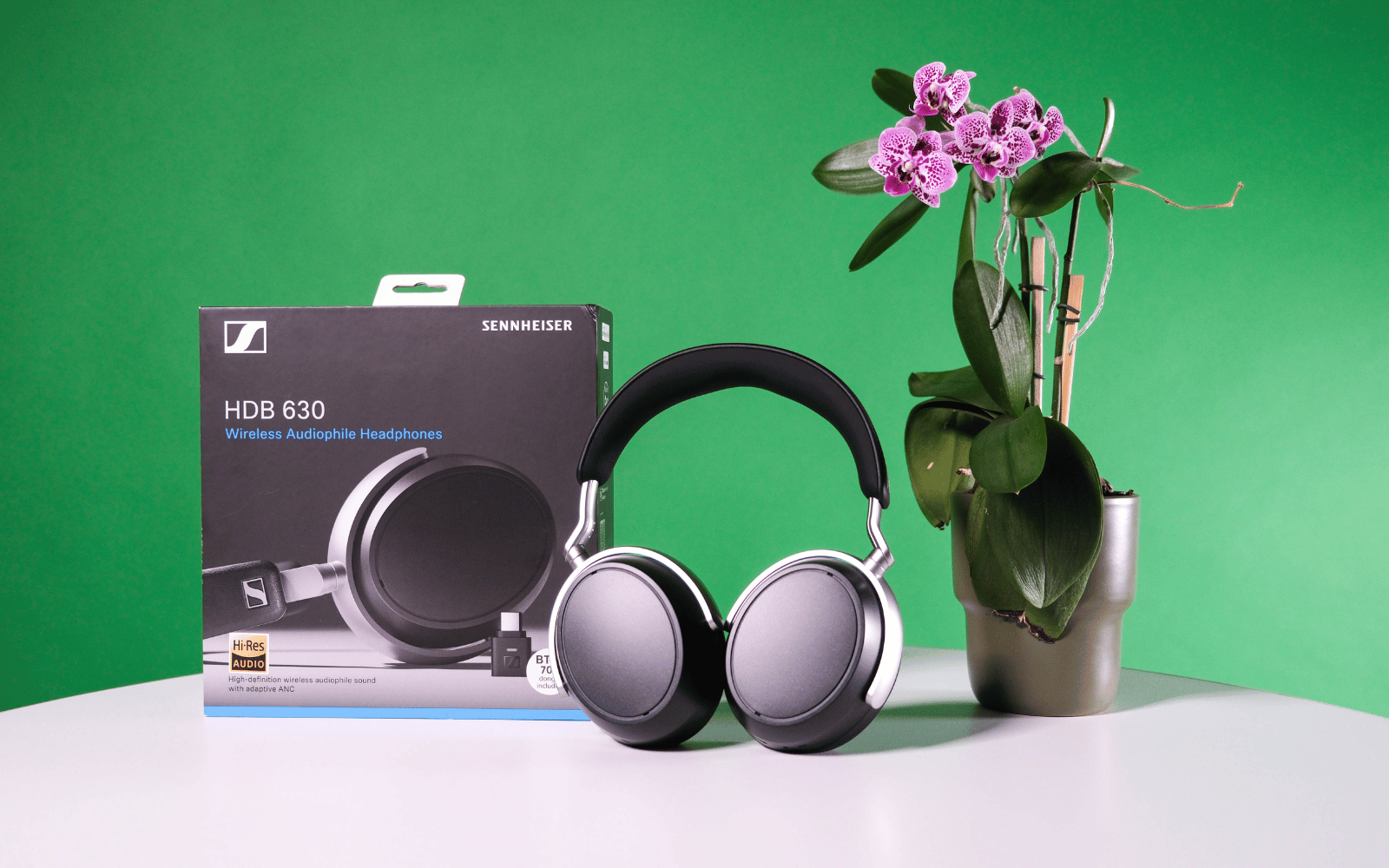
If you're shopping for new wireless headsets and don't want to compromise on audio quality, get the HDB 630. If ANC, looks, price, or a more dynamic sound profile trump overall audio performance for you, you'd probably be better off with something else.
-
Design
-
Sound
-
Battery
-
Features
-
Value
Sennheiser has over 80 years of experience producing high-quality audio gear of all descriptions. The HDB 630 are the latest flagship wireless noise-cancelling over-ear headphones that continue that legacy. They share many similarities with Sennheiser’s own Momentum range, but differ in a few crucial places.
These are comfortable, feature-packed headphones with fantastic audio performance. That must mean they’re prohibitively priced, right? At R13,000, we certainly wouldn’t call them cheap. While that’s a lot more than we originally expected, these cans make a very compelling argument for why they’re worth it.
In this case, there isn’t really a point in asking the hypothetical ‘are they any good?’ question because they are. Very good, actually. The real question is, are they the right pick for you? Here’s what you need to know to arrive at your answer.
First things second
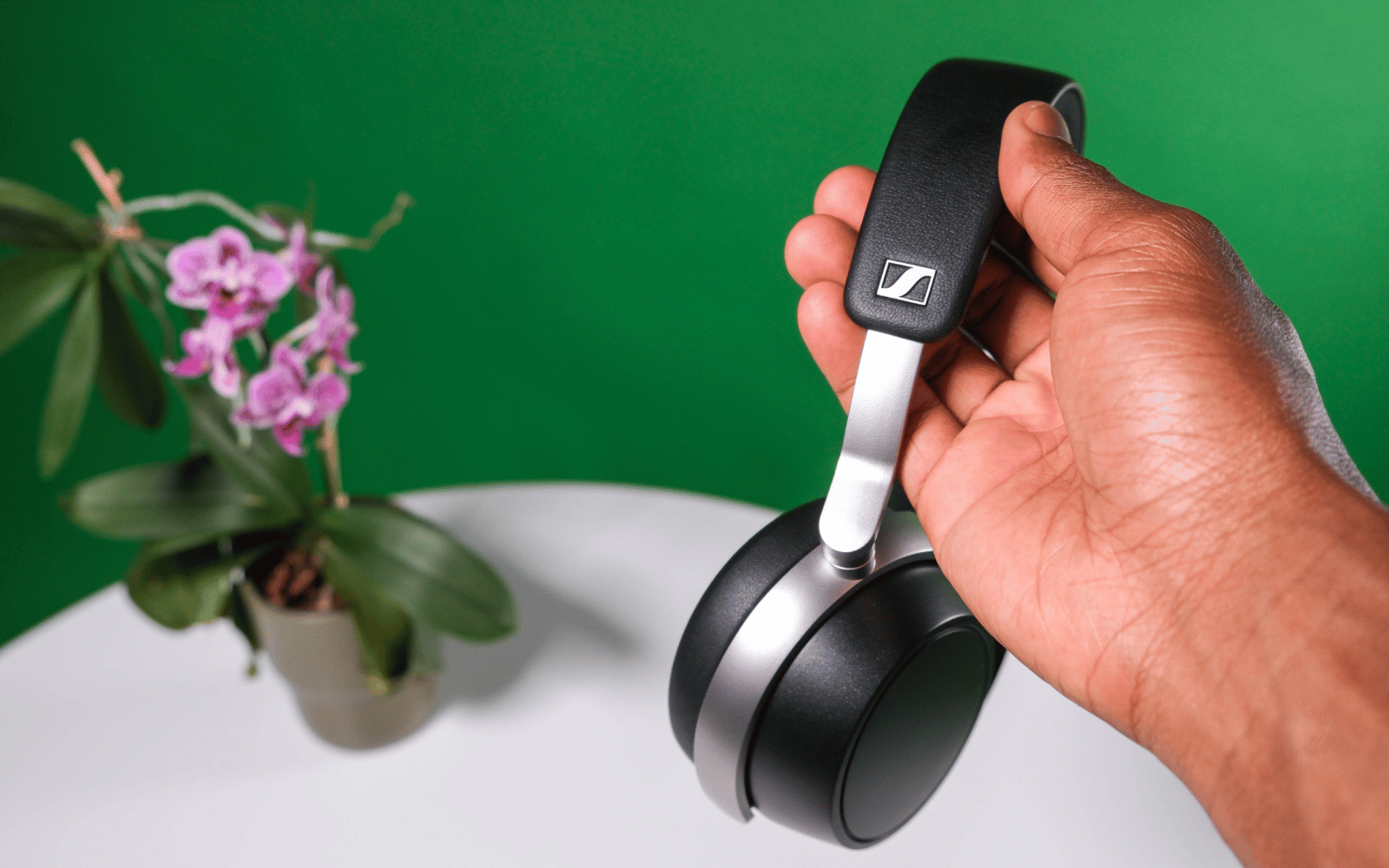
How comfortable a pair of headphones feels for you is just as, if not slightly more important, as how they sound. With everyone’s heads and ears being different sizes, there’s bound to be at least a few people who might disagree when we say these are supremely comfortable.
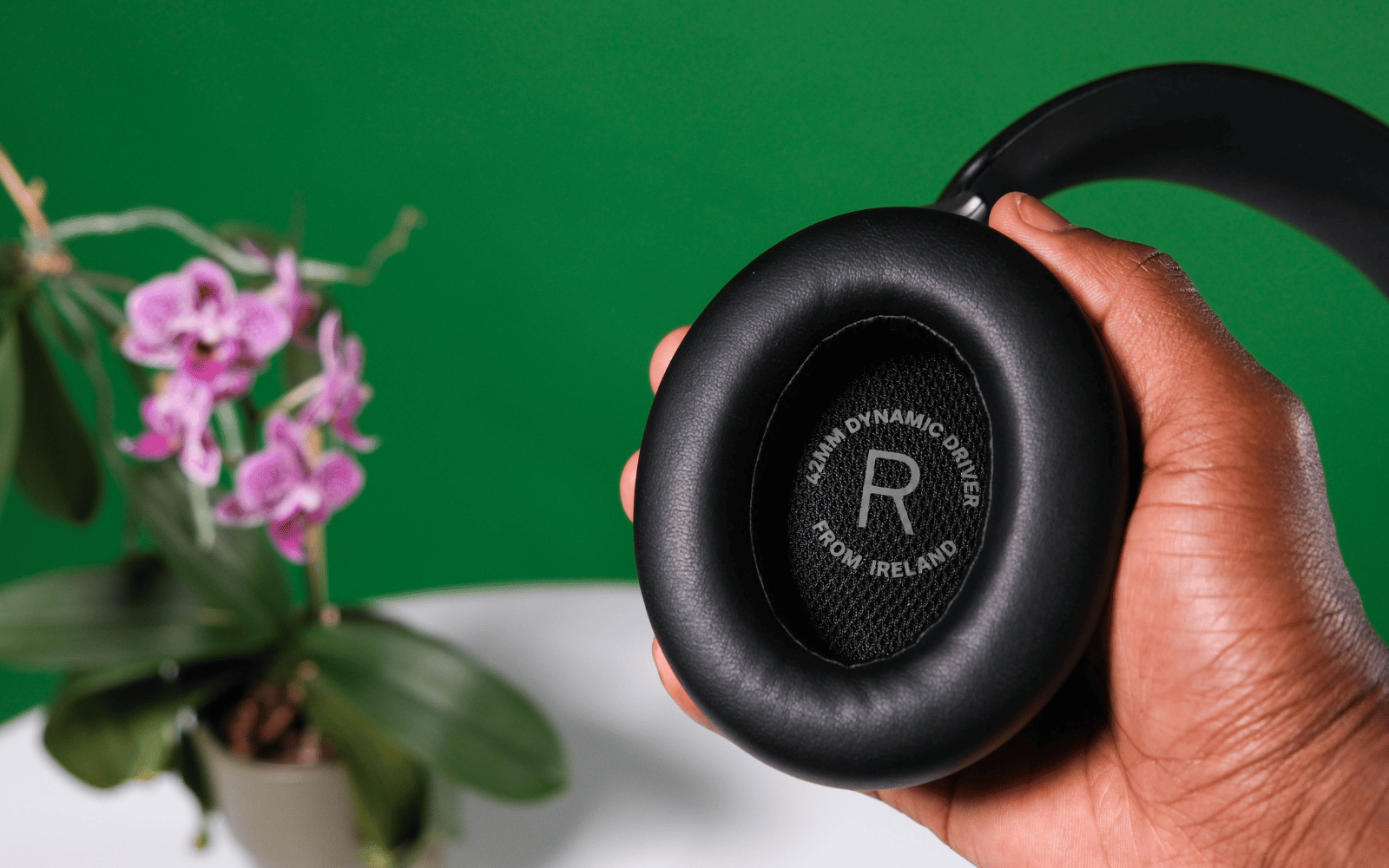
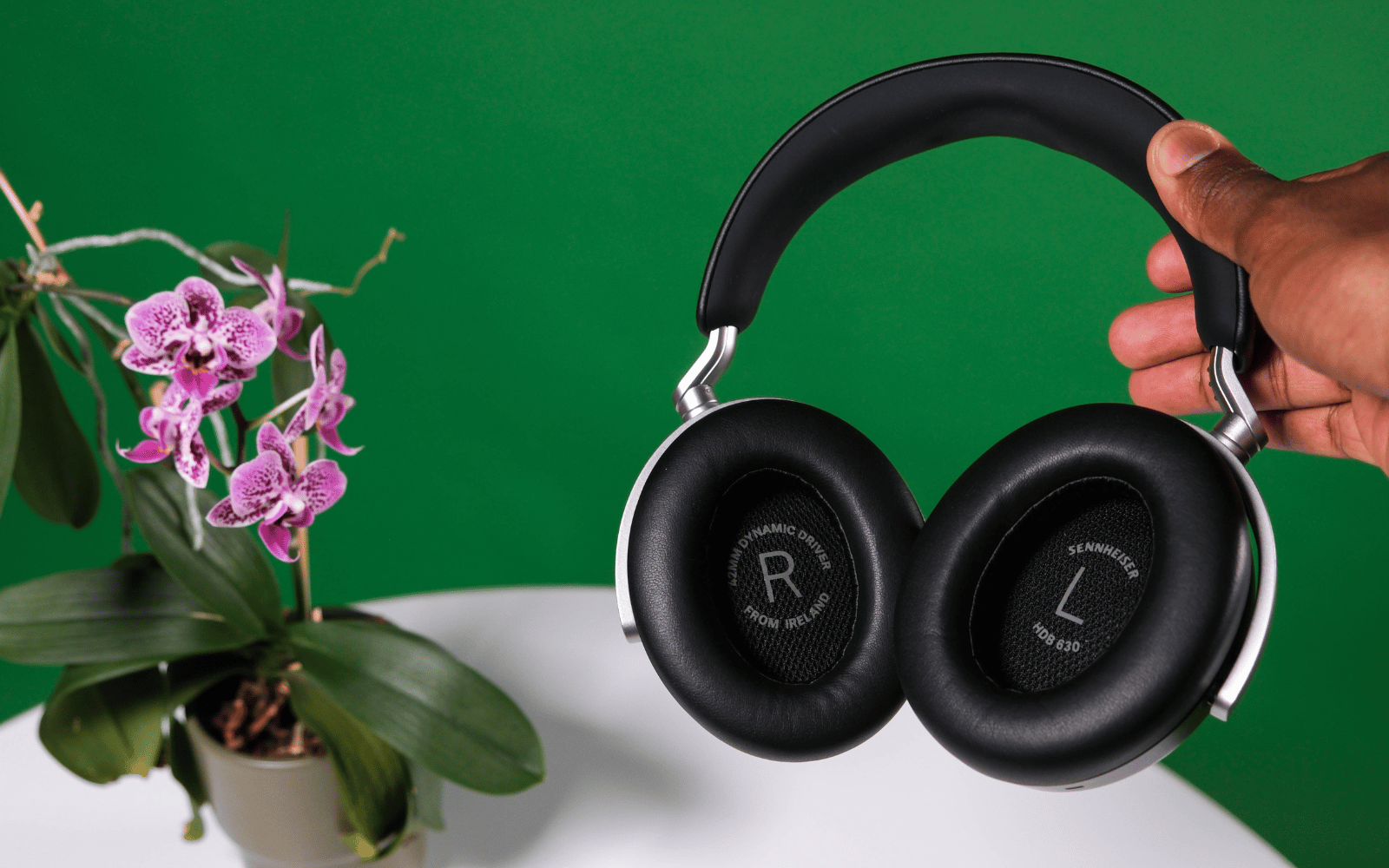
Sennheiser’s design and material choices mean that we never had an issue wearing these for eight or more hours at a time. The cups are slightly deeper than those of the Momentum 4, but that extra depth is packed with additional tech because our ears still pressed up against the inside foam on occasion. But the caress of the supple foam and soft fake leather, together with just the right amount of clamping, meant we didn’t mind. And, while they are slightly bulkier and around 20g heavier than the Momentum 4, the difference wasn’t a problem for us.
If you’re a fan of headphones that don’t announce themselves, you’ll probably like the HDB 630’s clean, professional look. There’s no flashy branding or bling. Just unmarked matte black earcups that won’t make fingerprints stand out so much, and that swivel in both directions, include silver yokes, while a black fake leather headband with the Sennheiser logo on either side rounds out the rest. If you’d prefer something more ostentatious, maybe those diamond-encrusted Beats are more your speed.
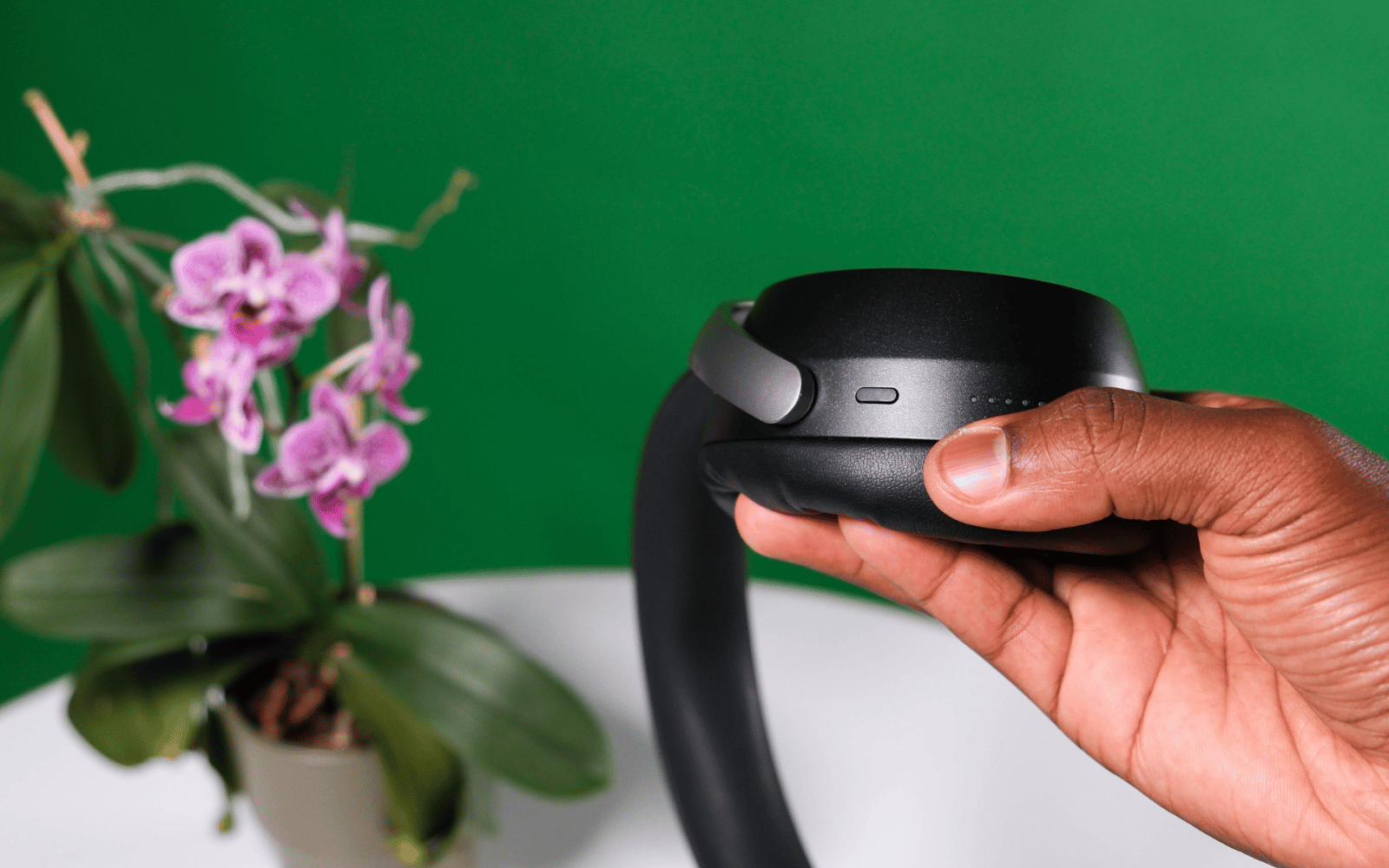
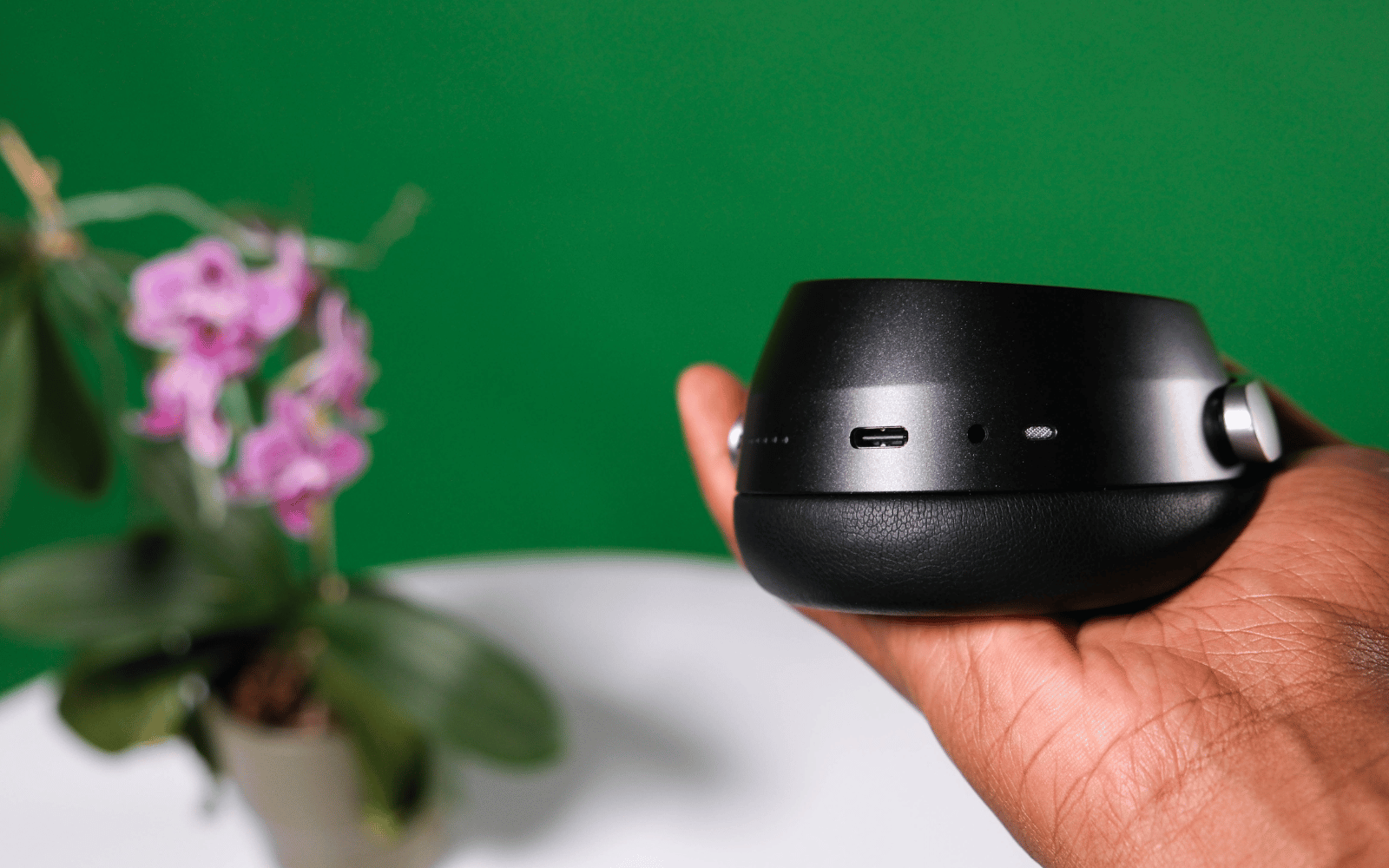
For operation, Sennheiser have opted for swipe gestures. They worked well, most of the time, but still fell victim to the usual pains of an accidental touch, or your gesture not registering the first time — we found the ANC pinch gesture in particular to be tricky to perform consistently. This could also be a skill issue, and one you might get better at over time. Or you can disable gestures in the app.
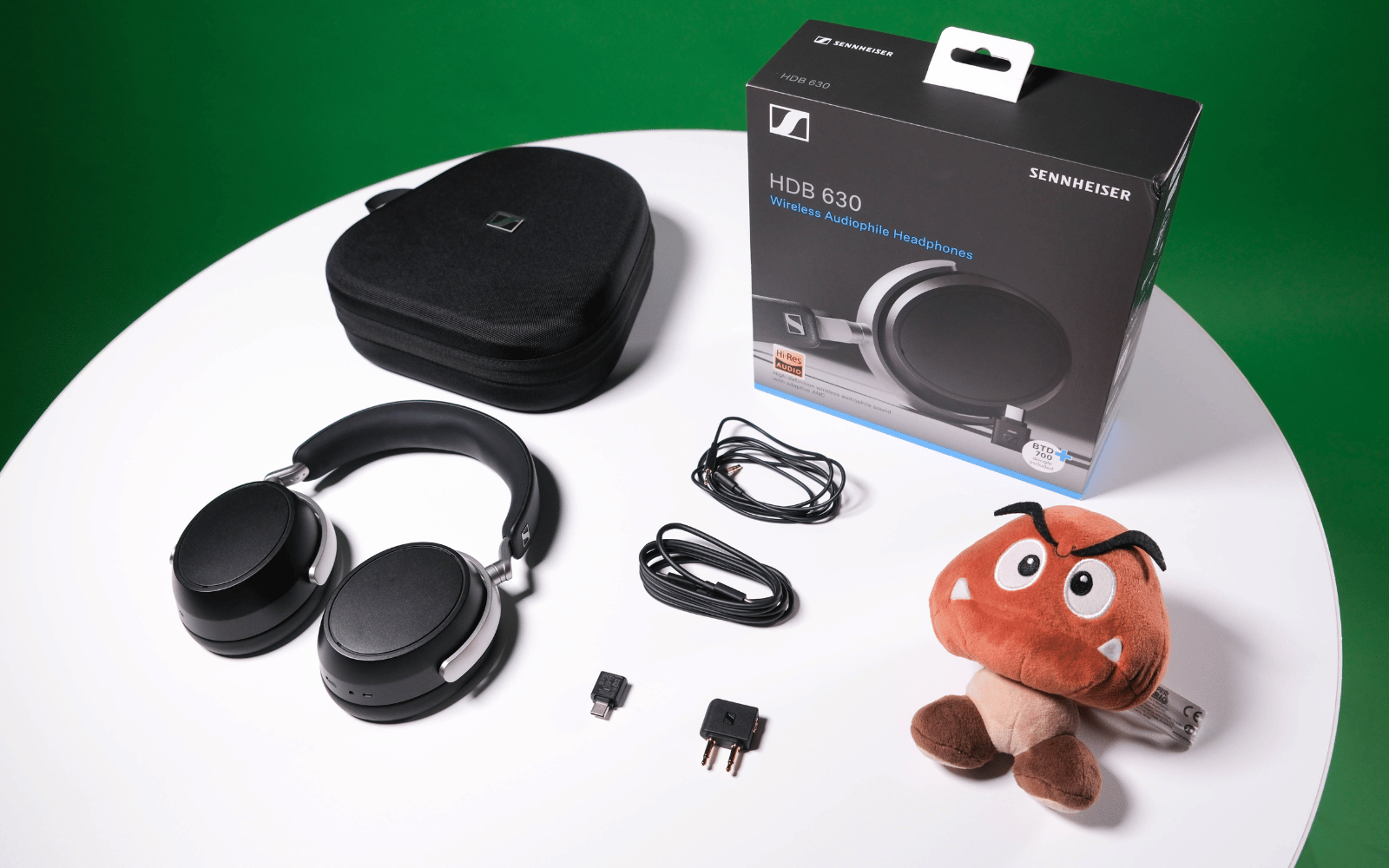
Other than the touch-capacitive area on the right earcup, the only other control is a physical button (also on the right cup) that will power them on and off, connect to your devices, or summon your digital assistant, depending on how long you hold it. The right also houses the USB-C port and the uncommon 2.5mm jack that Sennheiser insists on using. Good thing it provides cables for both in the case, along with an aeroplane adapter. That BTD 700 dongle also comes in the case, but we’re getting to that.
Undiluted black coffee
Sennheiser calling these ‘wireless audiophile headphones’ right on the box means they have a lot to live up to right from the start. We’re sure there will still be folks out there pointing and proclaiming with gusto how no wireless headphone can do high-resolution lossless streaming, so these simply can’t be for audiophiles.
But if you’re not one of those pretentious twits, and you value audio performance over all else, these are the headphones for you. And just for the record, these can technically play hi-res lossless, you’ll just need to plug them in with a USB-C cable. Audio nerds, keep in mind that it’s bit-perfect on iOS, but Android will resample it down to 48kHz (as it does with everything. Also, sorry for calling you pretentious.)
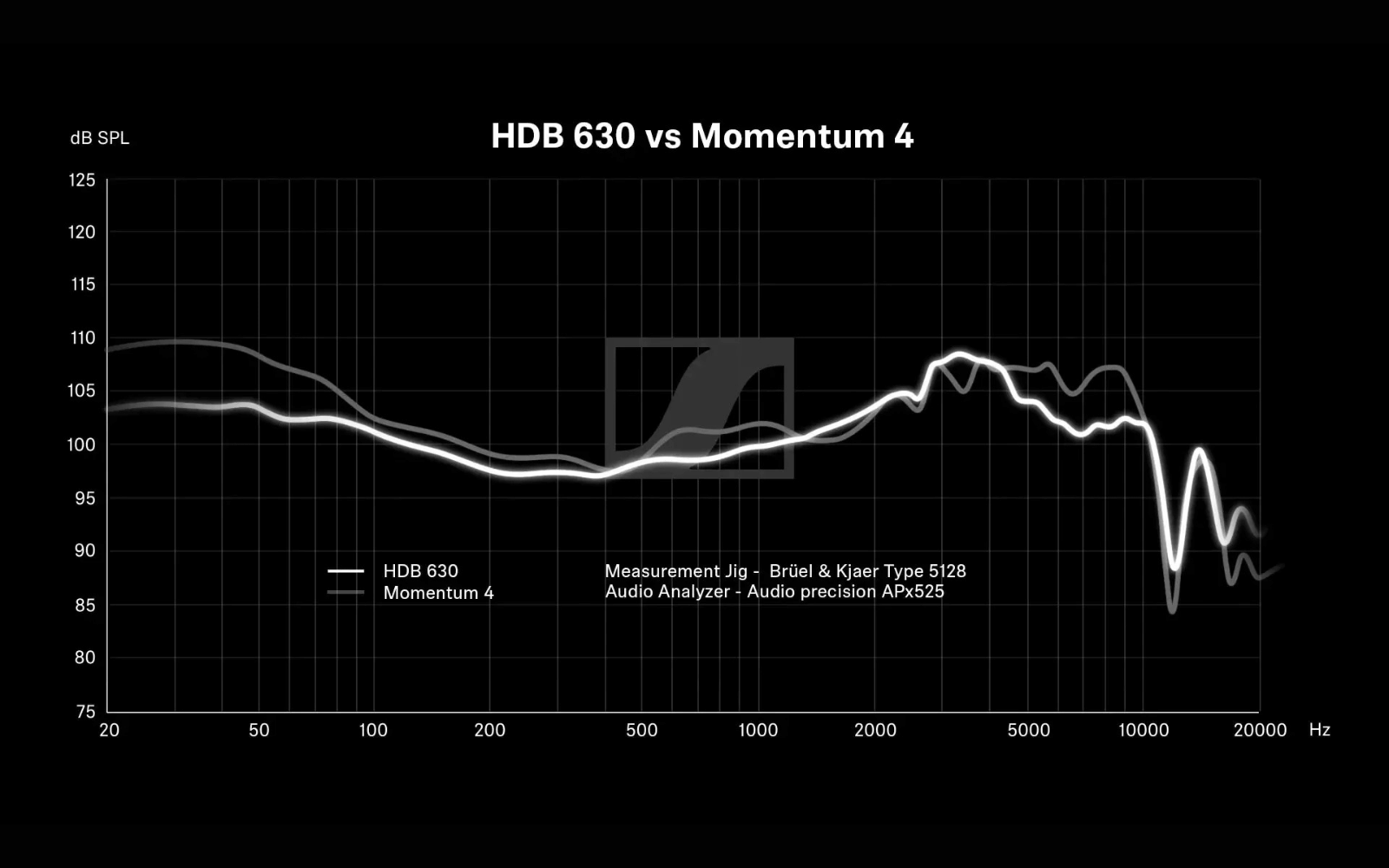
As for how they sound, the HDB 630 offers fantastic tonal balance, with Sennheiser opting for ‘target curve conformity’ for audio that sounds subjectively ‘flat’, or neutral — where no part of the frequency range stands out tonally from the rest. That’s the way most audiophiles like it. Black coffee, no milk or sugar. The whole ‘as the artist intended’ kinda thing.
That said, the low end still managed to stand out, and it’s where the HDB 630 impressed us the most. Targeting a neutral sound profile can run the risk of coming off as too light in the low-end. Despite this, we found the HDB 630’s low-end presentation to be tight and articulate without sounding bloated or boomy.
That means genres like EMD or rock should find good purchase among discerning listeners. The HDB 630 offers fantastic control in the low-end for the former, and great transparency to reveal each instrument’s separate timbre in the latter, which is often lost in headphones from companies that make different tuning decisions.
Since neither the lows nor the highs are emphasised, the mids come across as well-balanced. While we were looking for nits to pick, we did notice a slight sense of forwardness that could make snares and some vocals sound a little forced or shouty. The snare in Michael Jackson’s Billie Jean is a good example.
The treble range adheres to the overall balance and tight control while adding that airy ‘sparkle’ that most people take ‘audiophile’ to mean. There is a slight dip in the mid-treble that wasn’t always apparent in every song we played, but made some of them sound a bit closed-in — listen to the usually lush reverb in Enya’s Orinoco Flow.
Overall, the HDB 630 is trying to serve a specific audience: folks looking for transparency and deep musical insight over excitement and the usual dynamism that many other premium headphones offer, like Sennheiser’s own Momentum 4.
If you like your music like you like your coffee, and you prefer black coffee, you’ll almost certainly love the HDB 630. But if you prefer a bit of milk and sugar in your coffee or a bit of bass boost with your music, you might be happier with something that takes a more liberal approach to ‘audiophile sound’.
What else is there?
So it’s got the comfort and sound down, what else do you get? The HDB 630 could well be the last headphone you buy for a while, depending on how long Sennheiser’s build quality holds up — history says that should be as long as you do.
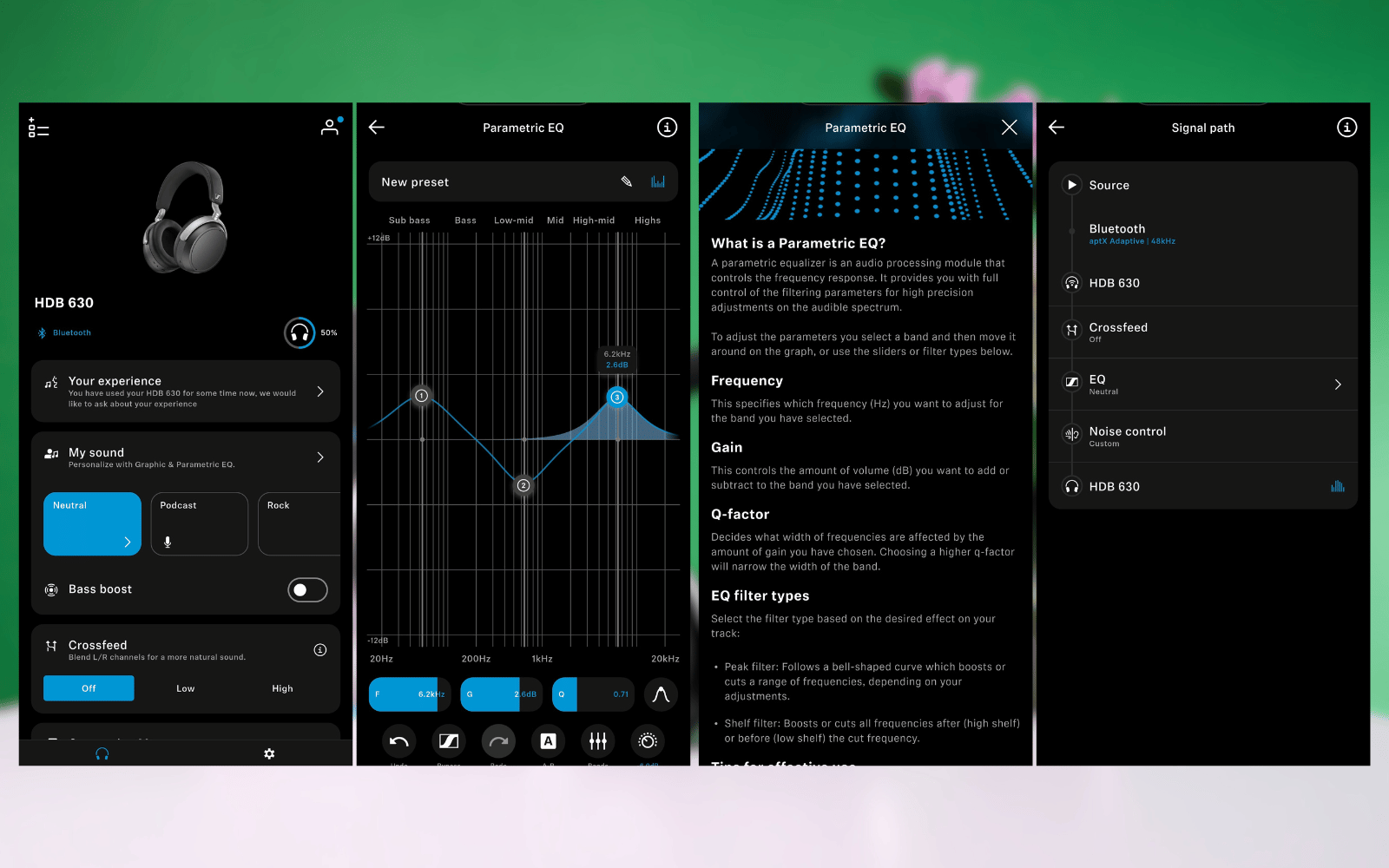
Not only do you get just about every headphone accessory you could need in the hard-shell travel case (the only one missing was a quarter-inch adapter), but Sennheiser also ships these with one of the best implementations of a five-band parametric EQ we’ve seen for a wireless headphone, ever.
If there’s anything you don’t particularly like about their sound, you can change it with the Smart Control Plus app (iOS/Android). Be warned, it might seem a little daunting if you don’t already know how to use one, but you do get a short walkthrough if it’s your first time. The app also gives you a surprising amount of control over the entire signal path, including Crossfeed, a feature that stimulates a three-dimensional soundstage by blending left and right audio channels, inspired by Sennheiser’s ludicrously priced (but still worth it) HE 1 system.
Then, there is Sennehiser’s BTD 700 USB-C dongle that comes with the HDB 630. This is a large part of what makes these headphones worth their price. It’s no good picking up a new pair of ‘audiophile’ headphones only to connect them to your eight-year-old iPhone to stream Spotify.
Out of the box, the HDB 630 supports the usual SBC and AAC codecs. They will also stream over Qualcomm’s aptX, aptX HD, and aptX Adaptive (with aptX Lossless being the highest level within Adaptive) codecs when conditions are favourable, i.e. both the source device and app support sending aptX signals and there isn’t too much nearby interference.
If you connect these to your old iPhone or laptop, you will likely be stuck with AAC. That’s where the BTD 700 comes in. Pair the headphones to it instead of your iPhone/laptop/old tablet, and they’ll use the best aptX codec the pair can manage. The app will even tell you which codec is in use at any given time. But that’s not all.
Want to use them for wireless gaming, but aren’t looking forward to dealing with the accompanying latency? Plug the BTD 700 in, click the button three times and boom, Bluetooth LE support for around 30ms of latency. That isn’t nothing, but it might as well be. We couldn’t find any perceivable latency during some Battlefield 6 gameplay. We’d advise using something else if you want to communicate with teammates, however. The dongle also adds Auracast support, or one-to-many audio streaming over Bluetooth LE, although the headphones don’t support it, which we thought was a strange decision.
You also get active noise-cancelling abilities. We only mention it in passing now because there wasn’t much to write home about. Sure, it functions as advertised, but it isn’t about to unseat Sony or Bose’s best. The transparency mode was fairly decent, but it can’t hold a candle to Apple’s AirPods Max.
We suppose we should also mention that battery life, in theory, sits at around 60 hours between charges with ANC enabled, or 45 hours when the dongle is involved. In practice, we got about a week and a half of 6-8 hours a day of music listening and the odd phone call. A full charge takes roughly two hours, but a 10-minute charge will net you about seven hours of playback.
Sennheiser HDB 630 verdict
These aren’t the best-looking headphones. Their clean, professional build is comfortable and functional, but not much more. All of the focus is on their audio performance. That’s who Sennheiser is marketing these towards. Those folks mostly don’t care about looks. Similarly, someone who cares about how their choice of headphones represents their personal style might be willing to sacrifice some audio performance.
Sennheiser’s latest wireless headphones aren’t going to be for everyone. Whether it’s for you is up to personal preference (do you like your coffee black?) and how far your budget can stretch. At R13,000, there are cheaper options. A few of those will perform better in certain situations — listening to music or making calls in noisy environments — while also sounding great. But we’re willing to bet they won’t sound as balanced or provide as well-rounded a package as the HDB 630.